
September 16, 2026 – our second day in Lake O’Hara, and the day we’d been waiting for: Lake O’Hara and Lake Oesa via Alpine Loop. The day before we’d taken the 10:30 bus in, set up our tent, and warmed up with the Lake McArthur and Big Larches Loop. Standing on the shore of Schaffer Lake that afternoon, we’d looked northwest toward the ridges of West Opabin and Yukness Ledges and wondered: are we really going up there tomorrow?
How we scored a cancelled campsite and how the bus booking works – I’ve written the whole process up in my Lake O’Hara camping guide, so I won’t repeat it here.
This loop strings together a handful of alpine lakes and two ledge traverses, going clockwise: from the campground to Lake O’Hara, climbing all the way up to Lake Oesa, then traversing the Yukness Ledges, dropping past Cascade Lakes, Moor Lakes and Hungabee Lake, and finally coming down via Opabin Prospect and the West Opabin Trail back to the lake. About 11.1 km, 530 metres of elevation gain. It took us 5 hours of moving time – 6 hours 20 with lunch at Lake Oesa and a lot of photo stops! If you only have one day in the area, Lake O’Hara and Lake Oesa via Alpine Loop packs the highlights into a single, very doable hike.
Why this Route
Lake O’Hara has no shortage of trails and combinations. We picked Lake O’Hara and Lake Oesa via Alpine Loop mostly because of time: we’d snagged just one cancelled night at the campground, had to pack up the next morning, and needed to catch the 4:30 pm bus out. The full Alpine Circuit is 12 km with three big ups and downs – at my pace, plus photo stops, I wasn’t confident we’d make that bus. So that was out.
This loop was the sweet spot. On AllTrails it’s listed as “Lake O’Hara and Lake Oesa via Alpine Loop” – 4.9 stars, 700+ reviews. You get the thrill of an alpine ledge traverse plus the classic postcard views of Lake Oesa and Opabin Prospect, all in one. Think of it as the “greatest hits” version. If it’s your first time in Lake O’Hara, I can’t recommend it enough. Next time, we’ll do the full Alpine Circuit.
Route overview (clockwise)
Campground → Lake Oesa: along the west shore of Lake O’Hara, around the south end, then climbing past Yukness Lake, Victoria Lake and Lefroy Lake.
Lake Oesa → Yukness Ledges: alpine route – just follow the blue-and-yellow paint marks on the rocks.
Yukness Ledges → Opabin Prospect → West Opabin Trail: (optional Opabin Plateau detour) past Cascade Lakes, Moor Lakes and Hungabee Lake, then down to Lake O’Hara.
Part 1: Lake O’Hara to Lake Oesa
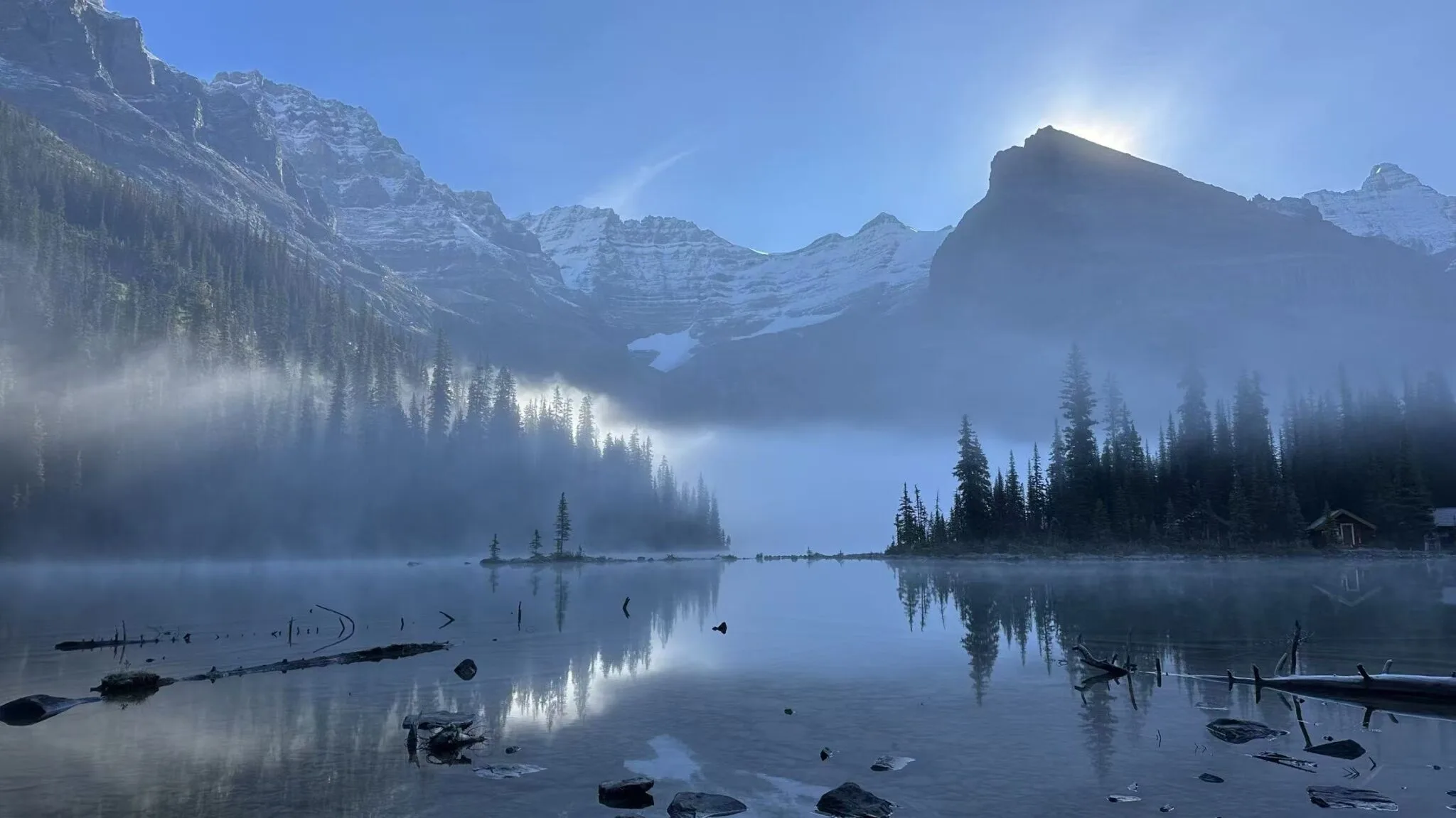
We left campground at 9:20 am. Five hundred metres later we were at Le Relais Day Shelter, with Lake O’Hara right across the road, wrapped in morning mist. Honestly, the trailhead alone was so beautiful we didn’t want to leave.
A short way along the shore there’s a fork – that’s the Wiwaxy Gap turnoff, part of the full Alpine Circuit. We stayed on the flat lakeside trail, enjoying it while it lasted, then started climbing: switchbacks, a few small cliff bands. After a stretch of stunted forest, the trail started hugging Victoria Falls upward. This section is stone steps built by Lawrence Grassi – there’s a memorial plaque set into the rock. (Grassi Lakes in Canmore is named after him, by the way.) Climbing those steps with the waterfall thundering right beside you – that’s a good morning.
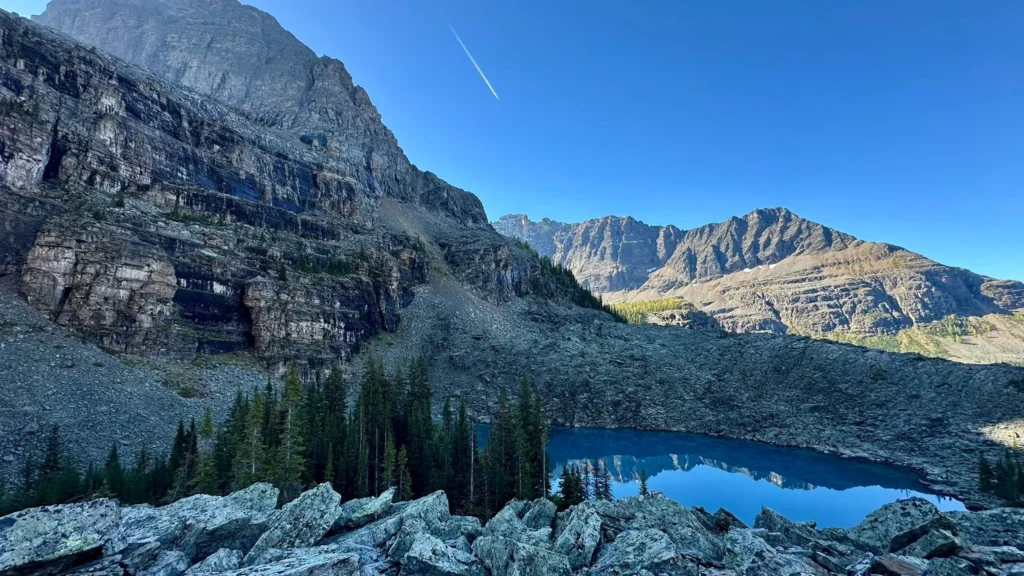
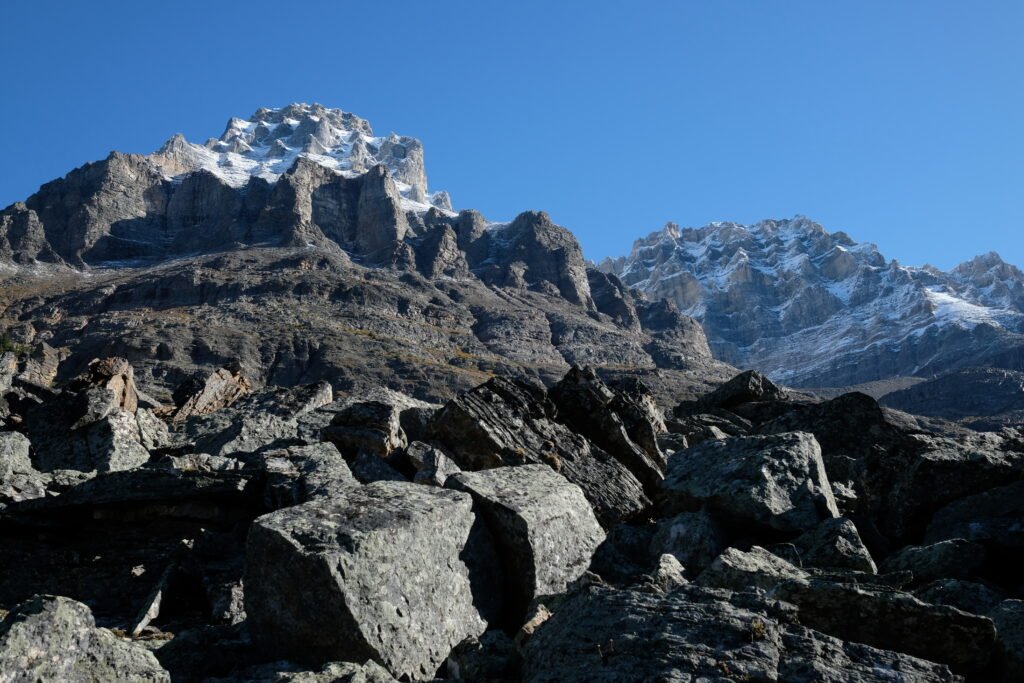
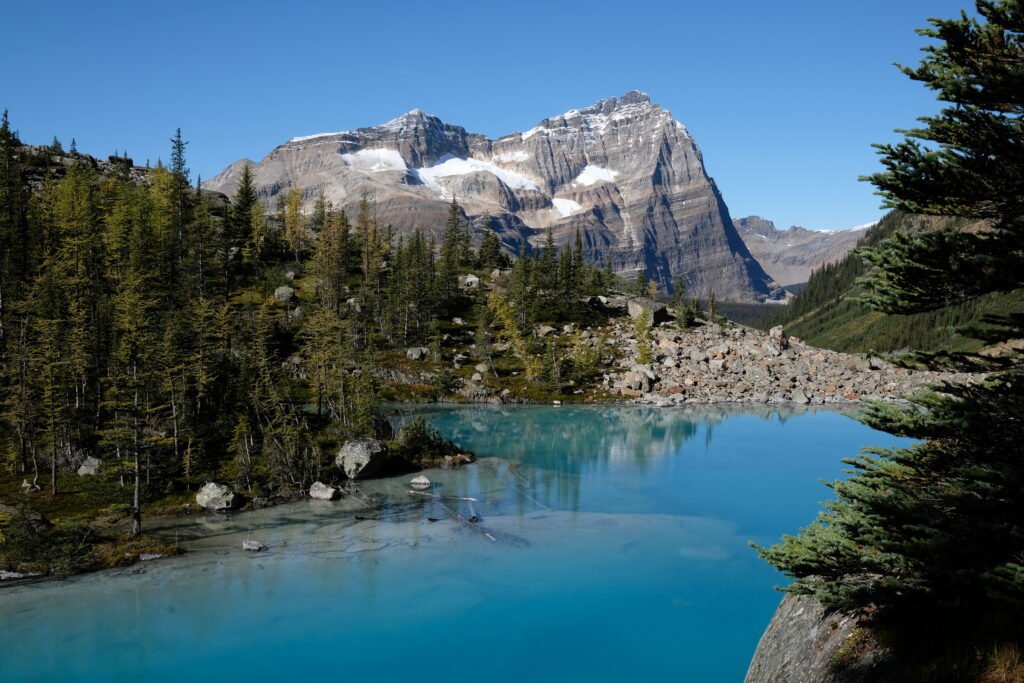
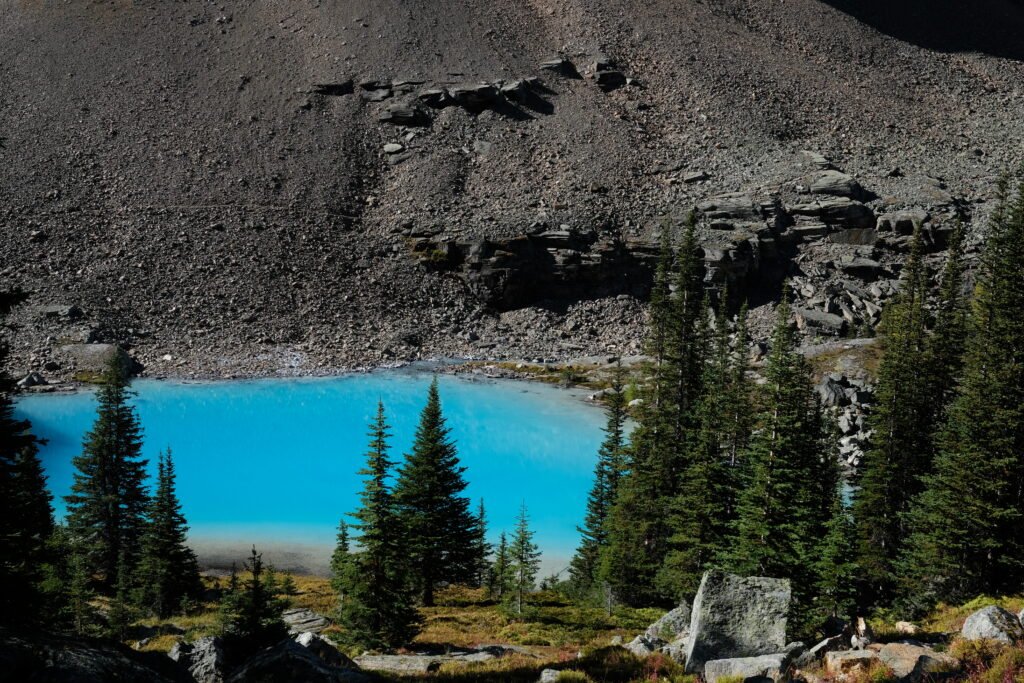
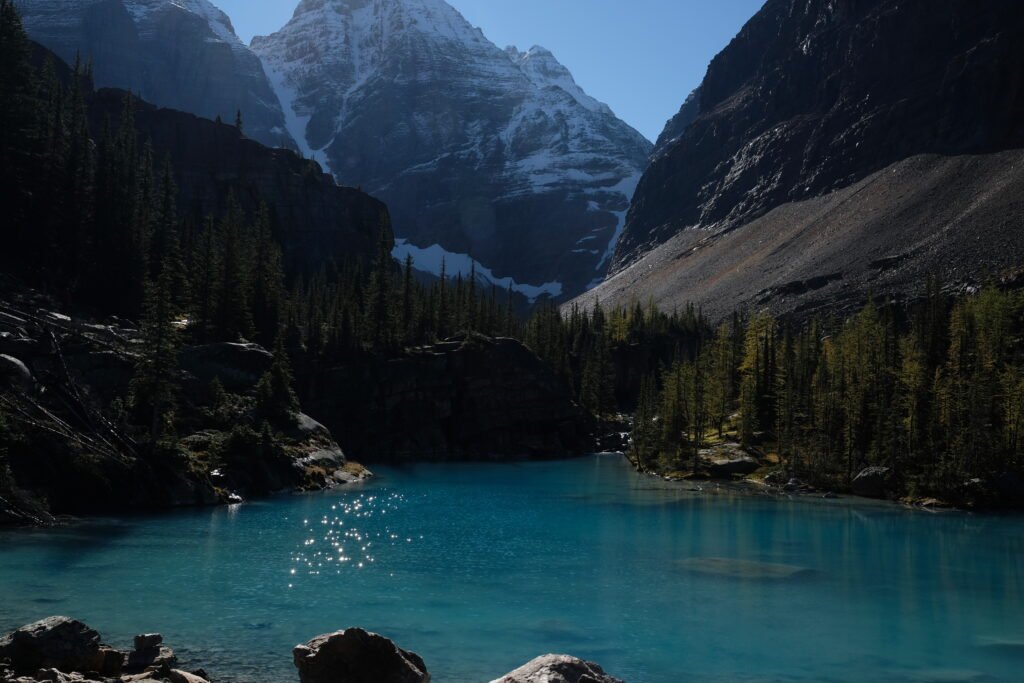
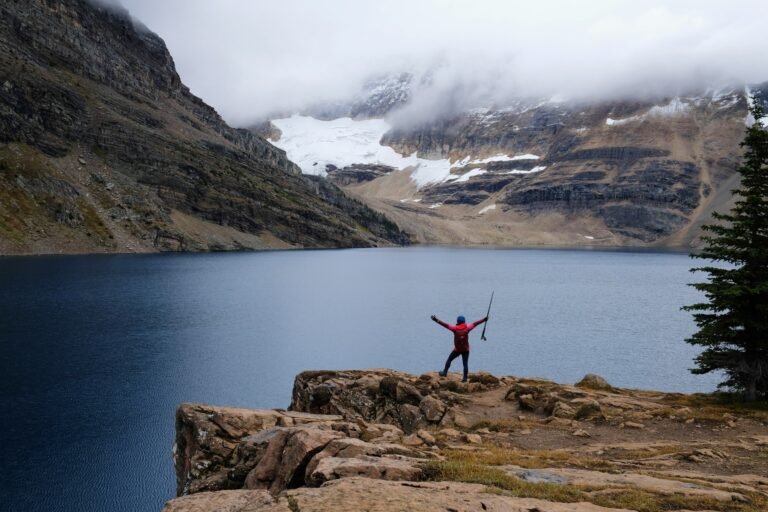
Then the little lakes, one after another: Yukness Lake with its dark cliffs mirrored in the water, Victoria Lake and Lefroy Lake in that milky, transparent green. (We’d see Lefroy again later from the other side, even bluer.) Past Lefroy Lake, the trail wound through a meadow ringed by cliffs, climbed a small grassy rise, squeezed through a notch cut into a rock chute – and there it was: Lake Oesa, spread out on rocky slabs with the snowy peaks of Mt. Lefroy and Yukness Mountain behind it.
Part 2: Traversing the Yukness Ledges
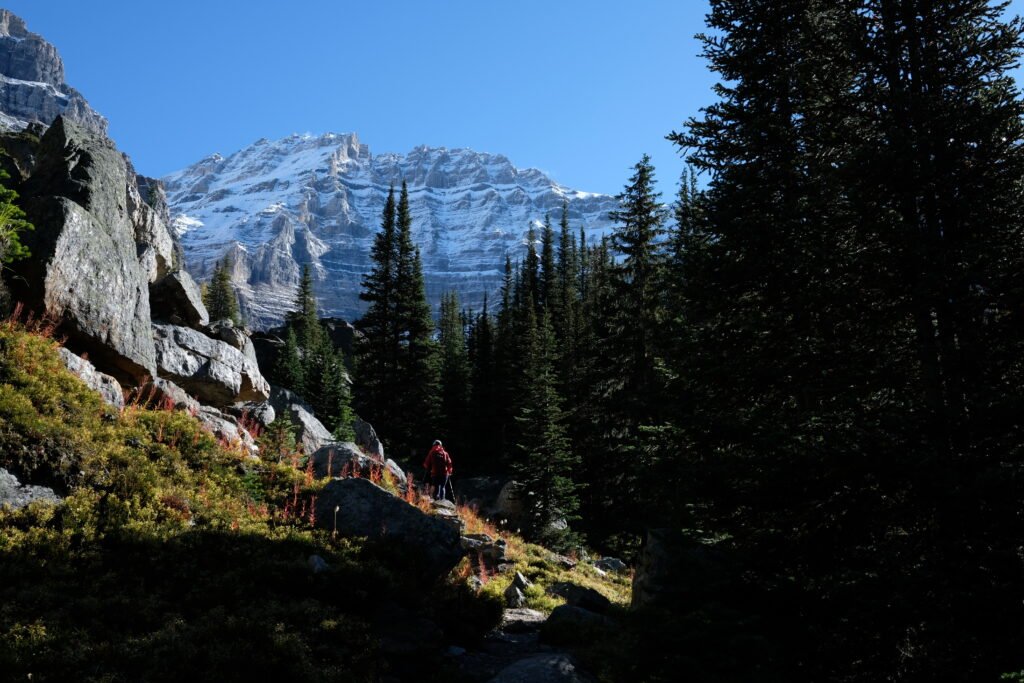
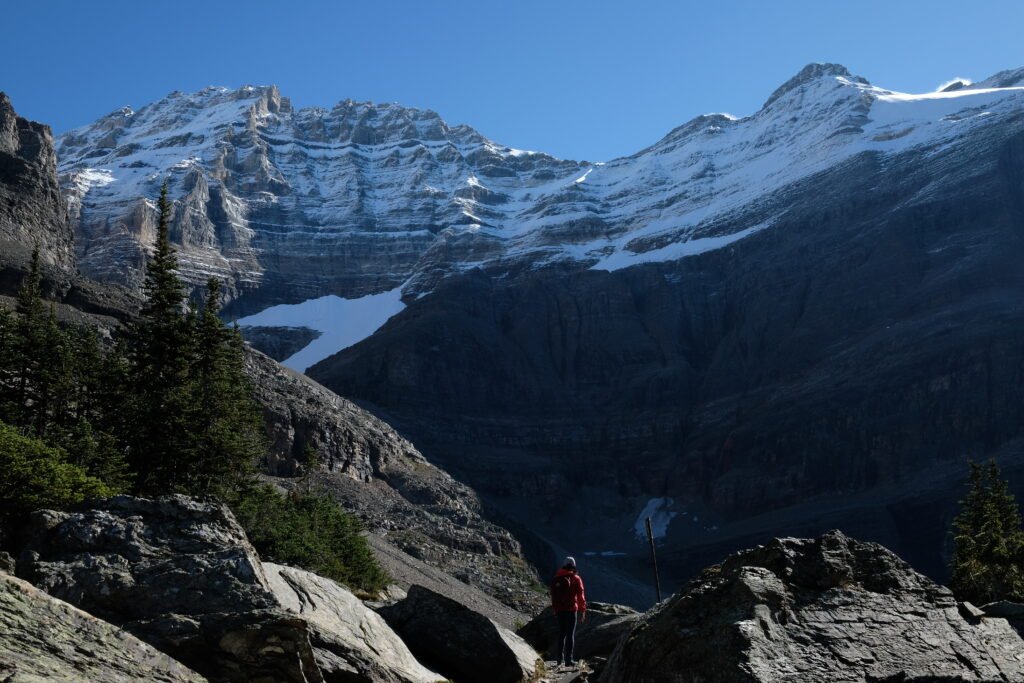
When we reached Lake Oesa, there was just one young couple on the shore. It was too beautiful not to stop, so we had lunch there, watching hikers come down the high route along the Huber Ledges in the distance.
Leaving Lake Oesa (reluctantly), we started up toward the Yukness Ledges, with Lefroy Lake impossibly blue on our right. The first stretch is a boulder field – hands-and-feet scrambling in places. At the top it flattens out, and you’ll hit a fork sign: one way says “Lake Oesa,” the other “Lake Oesa via Victoria Lake.” We’d come from Lake Oesa, so we followed the Yukness Ledges / Opabin direction.
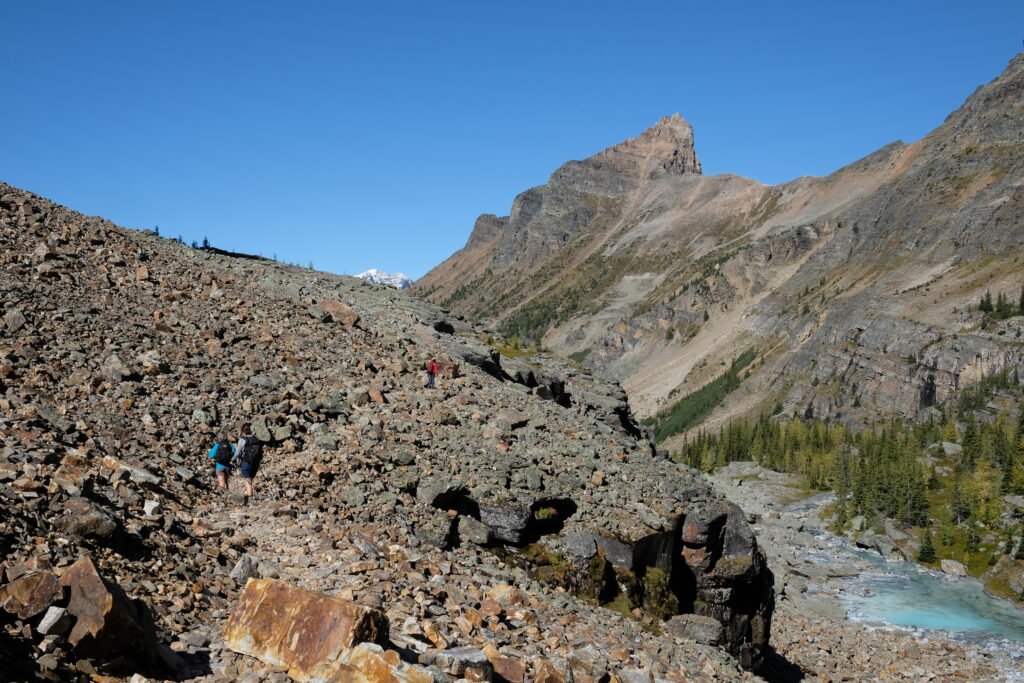
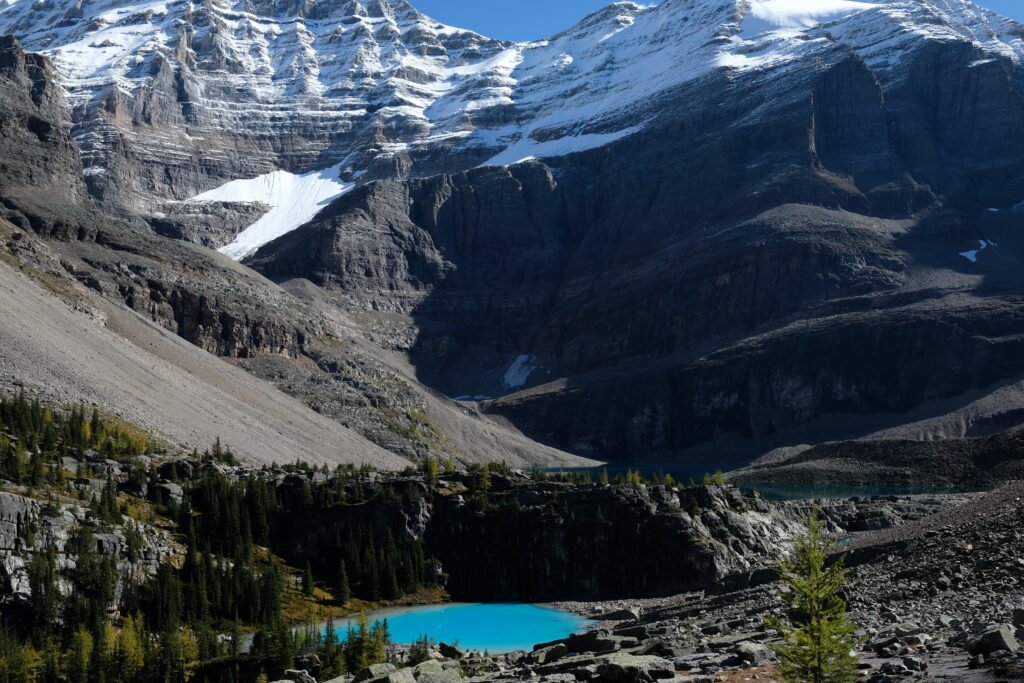
A little further, another alpine lake – Yukness Lake again, from above this time – and the rocky trail started descending gently, curving around Yukness Mountain. This part is hard to follow; all you’ve got is the blue-and-yellow paint marks on the rocks. (Every alpine route in Lake O’Hara uses these same marks. When there are forks, just follow the paint.) The trail turns sharply through the boulders sometimes. Don’t stare at your feet the whole time – look around for the next mark.
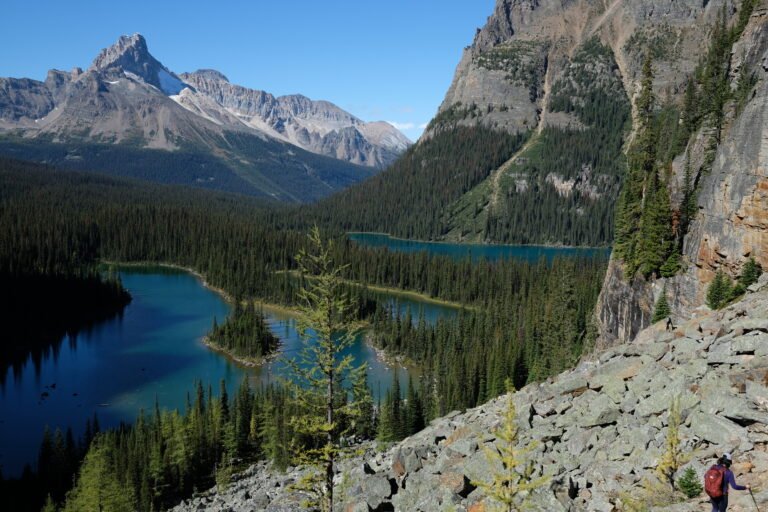
Then around a bend, everything opens up: this is the narrow ledge section of the Yukness Ledges, with the whole of Lake O’Hara laid out in front of you. The ledge itself isn’t wide. At the last turn there’s a rocky slope – down first, then up, going clockwise – right on the cliff edge, and the big wet rocks after the snowmelt are unavoidable. Two women from Salmon Arm turned around here. I’ll be honest, I almost did too. My husband had already walked across easily to scout it, but he wasn’t sure whether worse was coming. Then a young couple showed up, dressed for trail running, and offered to walk me through – one in front, one behind, me in the middle. With them chatting beside me, eyes on my feet and not on the drop, it wasn’t so scary after all. They live in Golden; the guy’s name is Graham, and you could tell from the build he’s a serious trail runner. We ran into them again back at Lake O’Hara, hanging around the lake waiting for the bus. I thanked them all over again.
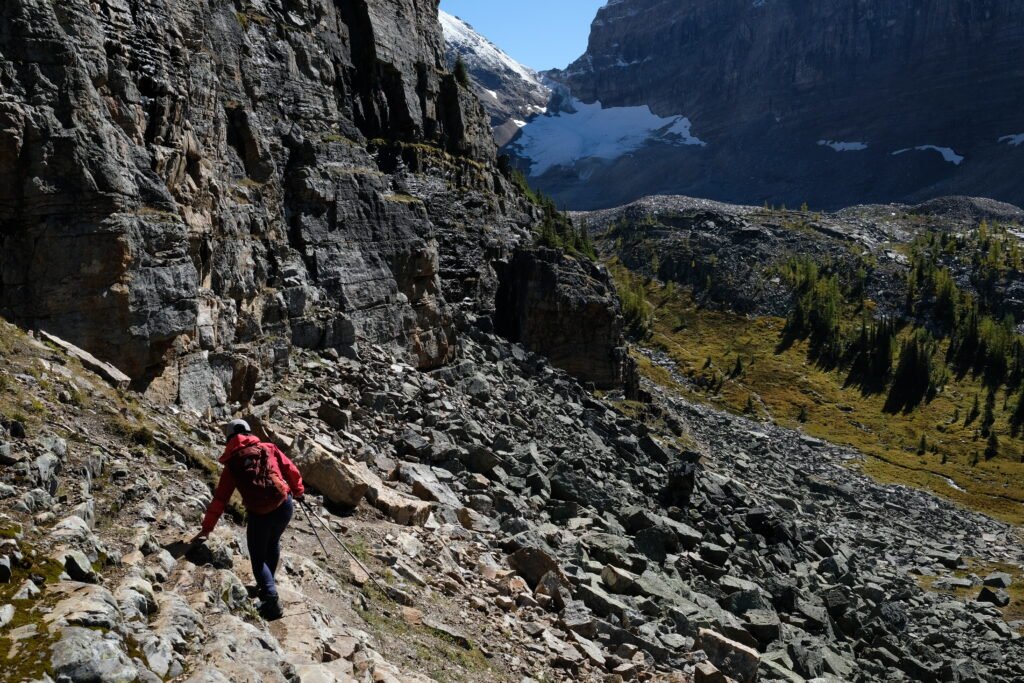
After the flat ledge stretch, it’s about 30 minutes of boulder scrambling down toward the Opabin side. Hungabee Lake and the Cascade Lakes come into view one after another.
Part 3: Meadows, Opabin Prospect, and down the West Opabin Trail
Coming off the ledges and down through the boulder field, you reach the meadows, passing Cascade Lakes, Moor Lakes and Hungabee Lake. Mid-September, the meadow was already yellowing, the larches about 30% turned – the same “autumn just picking up its brush” look as our McArthur day. We skipped the Opabin Plateau detour (toward Opabin Lake) – if you have time it’s not far, a short extra walk and a little more climbing, worth it.
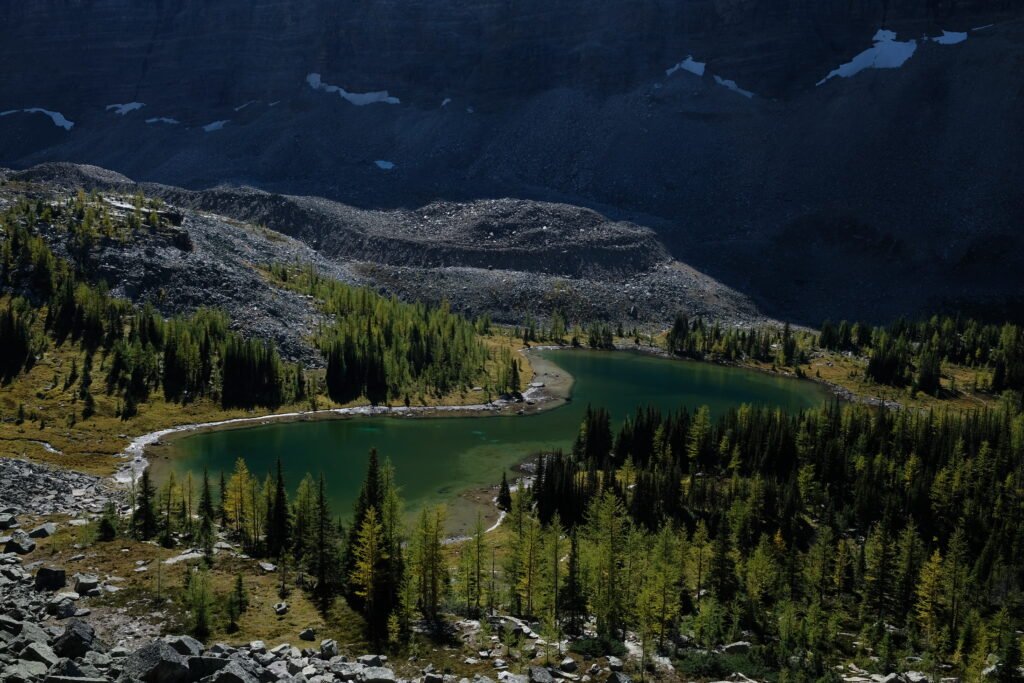
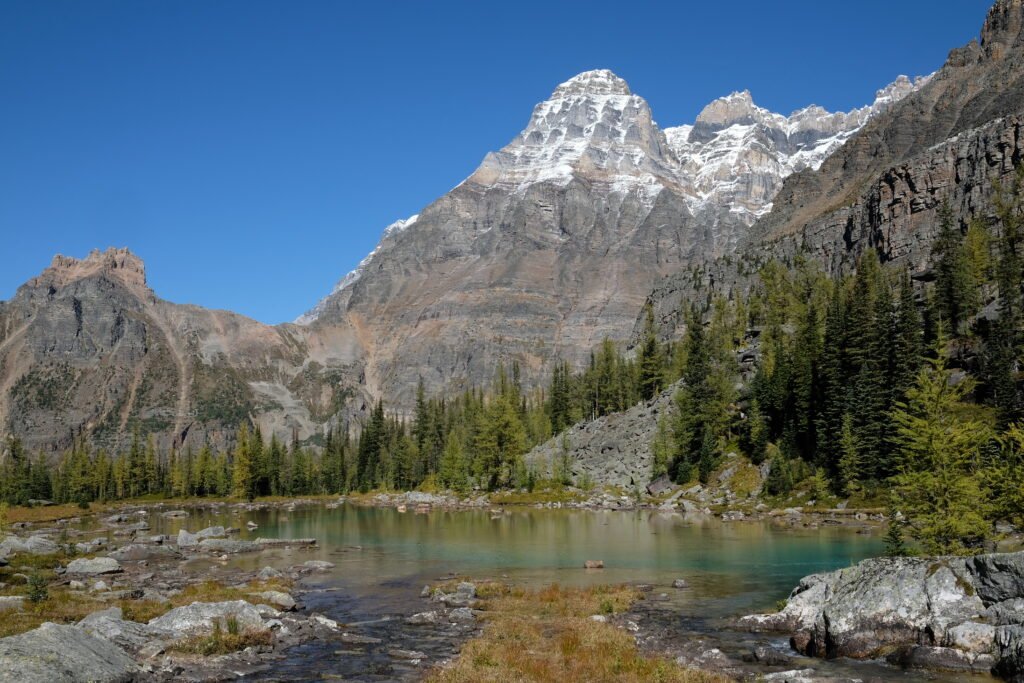
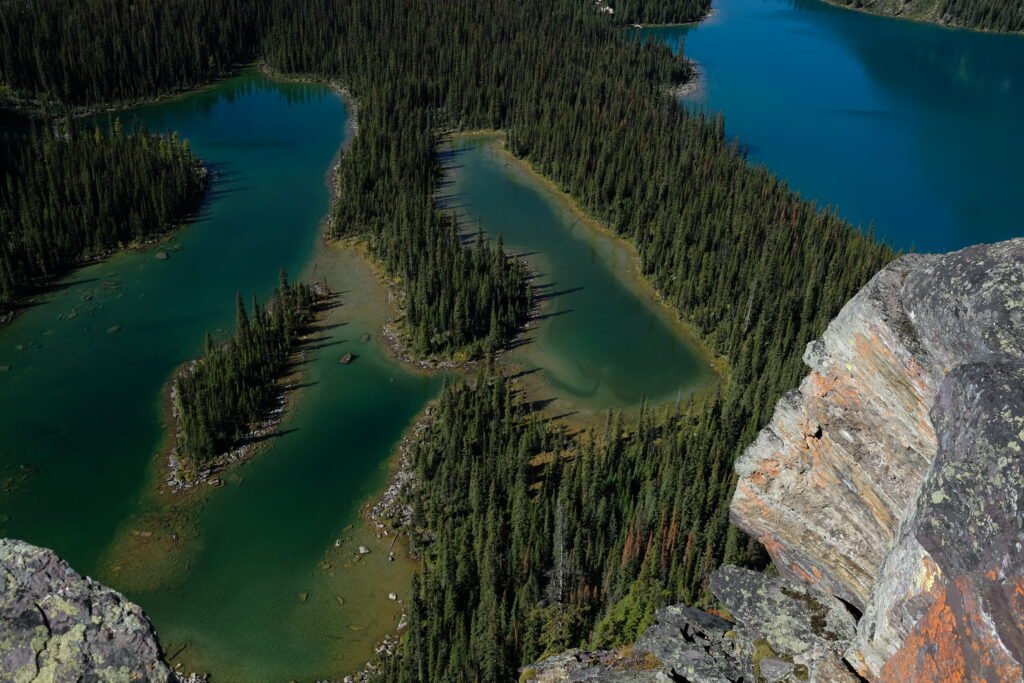
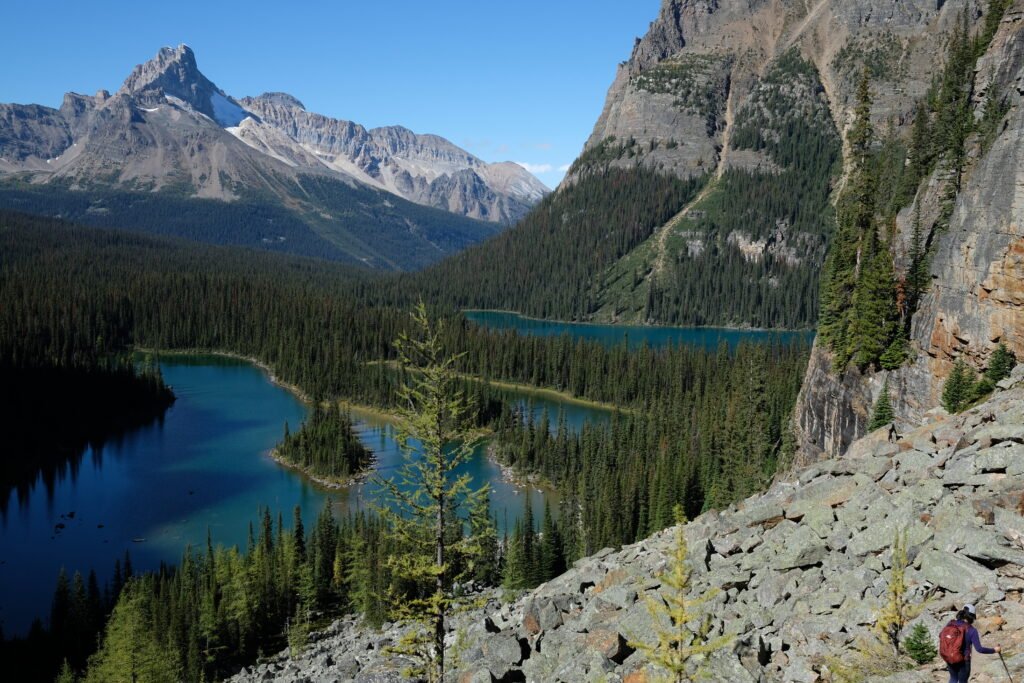
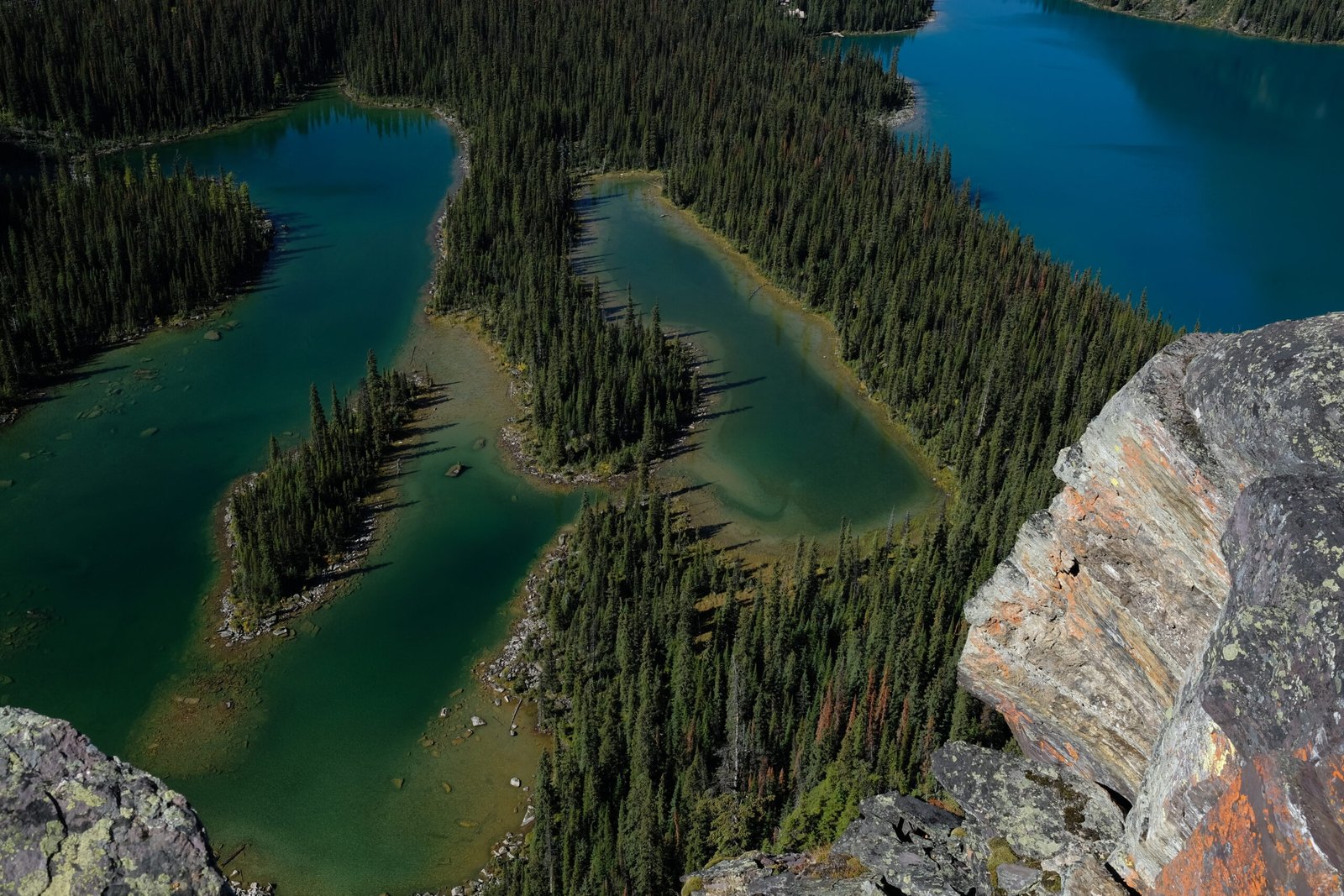
Then up to Opabin Prospect – the single most classic postcard view in Lake O’Hara. After soaking it in, we took the West Opabin Trail down. It’s steep, dropping all the way to Lake O’Hara past the Lake O’Hara Lodge property. We were back at camp by 3:40.
Camping and Shuttle Bus
We only got in because someone cancelled – that’s how hard Lake O’Hara is to book, as anyone who’s tried knows. The full booking playbook is in my Lake O’Hara camping guide; here are just the two things that matter for this hike:
The return bus: daytime buses back are usually 2:30, 4:30 and 6:30. We got back to camp at 3:40 and caught the 4:30. Start early in the morning – budget generously for photos, lunch and route-finding.
The night before: no overnight parking or camping at the trailhead lot. Closest options are Field (about 15 minutes) or Lake Louise (about 20 minutes); Banff (about 70 km) and Golden (1 hr 20 min) work too.
Camping-wise, Yoho’s frontcountry campgrounds are another option: Kicking Horse is reservable, Monarch is first-come first-served.
Where to stay
If you can’t get a Lake O’Hara campsite but snag a day bus – or hike the 11 km road in yourself – here are your options for the night before:
- Lake Louise — about 12 km from the Lake O’Hara parking lot, the closest option. Perfect for catching the-earliest 8:30 bus in. Hotels, hostels, motels, campgrounds — but book 3–6 months ahead in summer, it’s pricey and fills up. Check Lake Louise accommodation
- Field — about 13 km away. Tiny town, very few places to stay, but quieter than Lake Louise. Good if you’re driving and want to avoid crowds. Check Field accommodation
- Banff — about an hour’s drive. Most choices, from hostels to luxury hotels. Works if Lake O’Hara is a day trip or backup plan — just leave very early. Check Banff accommodation
- Canmore — about 1 hr 15 min. Plenty of options, cheaper than the above, good for families. Check Canmore accommodation
- Golden — about 1 hr 20 min. Best if you’re coming from the west. Most affordable of the bunch. Check Golden accommodation
Disclosure: This post contains affiliate links. If you book through them, we may earn a small commission at no extra cost to you.
More Lake O’Hara
The warm-up hike from the day before: Lake McArthur and Big larches loop (English version coming soon)
The full booking guide: Lake O’Hara camping – how to snag one of 30 sites (English version coming soon)
Good to know: Season, Weather, Gear
Season: mid-July to early September is ideal – the high routes are snow-free. Late September brings golden larches against dustings of snow, the most beautiful combo, but it’s cold, and camping means packing for it. Always check the Parks Canada trail report before counting on the high routes – if there’s ice or snow up there, bring microspikes, go carefully, or skip the ledges. The lakeshore trails alone are gorgeous enough.
Weather: mountain weather changes fast. Wet or icy rock on the ledge sections plus steep drops is a genuinely dangerous combination – don’t push it.
Bear spray: Yoho is grizzly country. Carry it.
Poles: yes, bring them – though on the big boulder sections you’ll want your hands free, so be ready to strap them to your pack.
We came to Lake O’Hara hoping for one perfect day on the trails, and Lake O’Hara and Lake Oesa via Alpine Loop delivered exactly that. If you go, start early, save some energy for the ledges, and don’t rush lunch at Lake Oesa – you’ll want to remember that view.