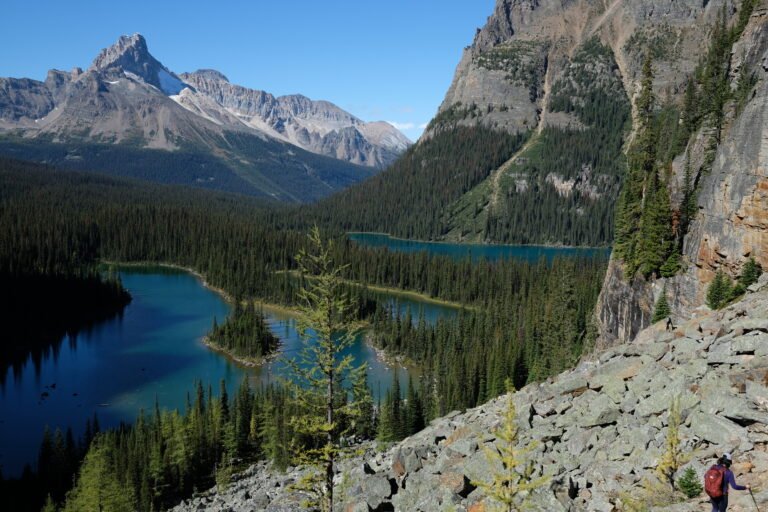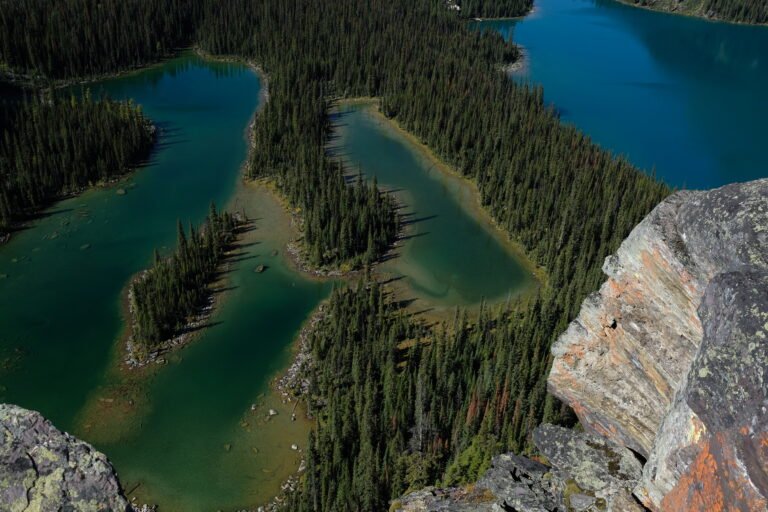

Mid-September in Lake O’Hara, and the larches are just starting to turn – about thirty percent gold, the rest still every shade of green. The gold seeps out through the gaps in the spruce, first the outermost branch tips, then slowly working inward, like autumn has just picked up its brush and hasn’t finished the painting yet.
On September 15, 2026, we got lucky and snagged a cancelled one-night Lake O’Hara campsite. We took the 10:30 bus in that morning, and by the time the tent was up it was already afternoon, so we picked an easier hike in the park as a warm-up: Lake McArthur and Big Larches Loop.
How to book the Lake O’Hara campground and shuttle bus, other lodging in the park, and how to grab cancellations – I’ve written the full process in my Lake O’Hara camping guide, so I won’t repeat it here.
The full trail name is the Lake McArthur and Big Larches Loop Trail – on the map it’s a loop that twists into two figure-eights. It starts from Le Relais Day Shelter, and then the climbing begins. According to our AllTrails recording, it’s about 9.8 km from the campground with 429 metres of total elevation gain.
Hike Recap: Lake McArthur and Big Larches Loop
The Low Level side first
For Lake McArthur, we chose to start on the Low Level side – the opposite of the High Level route that most people take. Apart from the lakeshore, we had the trail almost entirely to ourselves and dodged the “crowds.” I’d recommend our direction, which is also the direction of the arrow on AllTrails.
Starting from the north side of Le Relais Day Shelter, the trail signs are clear. This section is easy, rising gently through the forest on a mild grade – classic Rockies gravel-and-dirt tread. Before long you’ll hit a junction where you can see Elizabeth Parker Hut. It’s an Alpine Club of Canada hut tucked into a beautiful alpine meadow. Booking it means entering the online lottery, which opens every December – very hard to get. Becoming a member gets you an extra lottery entry.
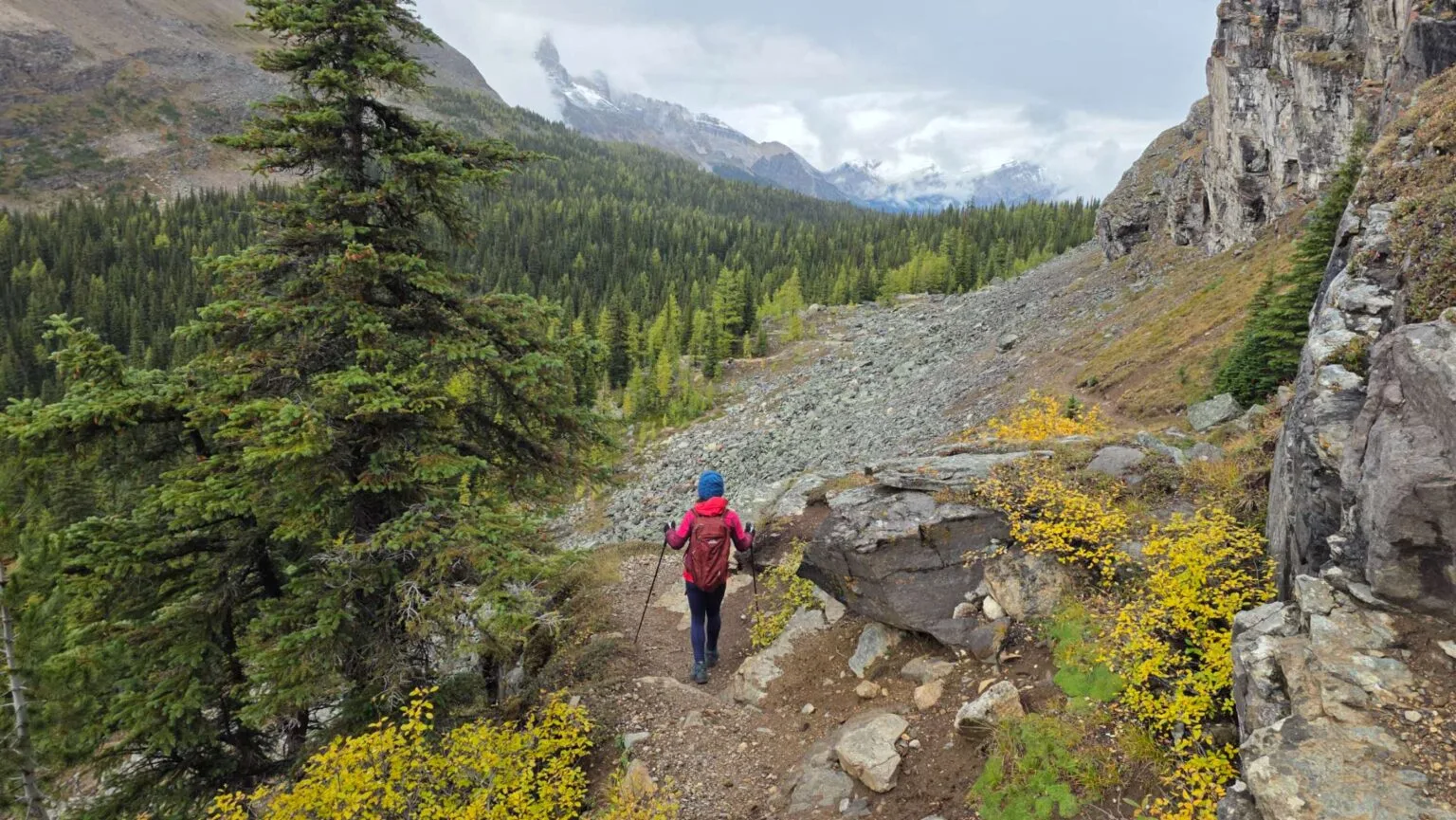
The trail between the ACC hut and Schaffer Lake is called Alpine Meadow. We wove through sparse forest, the gold of the larches seeping in from both sides – about thirty percent of the canopy turned, the rest still deep green. Sunlight leaked through the treetops onto the newly turned needles, and that yellow isn’t the blazing scarlet of eastern Canadian maples but a warm, mature gold.
Schaffer Lake in the distance
Because we took the Low Level route in – hiking the McArthur Pass trail – Schaffer Lake only showed us a corner through gaps in the trees. We didn’t stop; today’s goal was Lake McArthur! We’d come back along the High Level on our way out and see it properly then.
The final climb
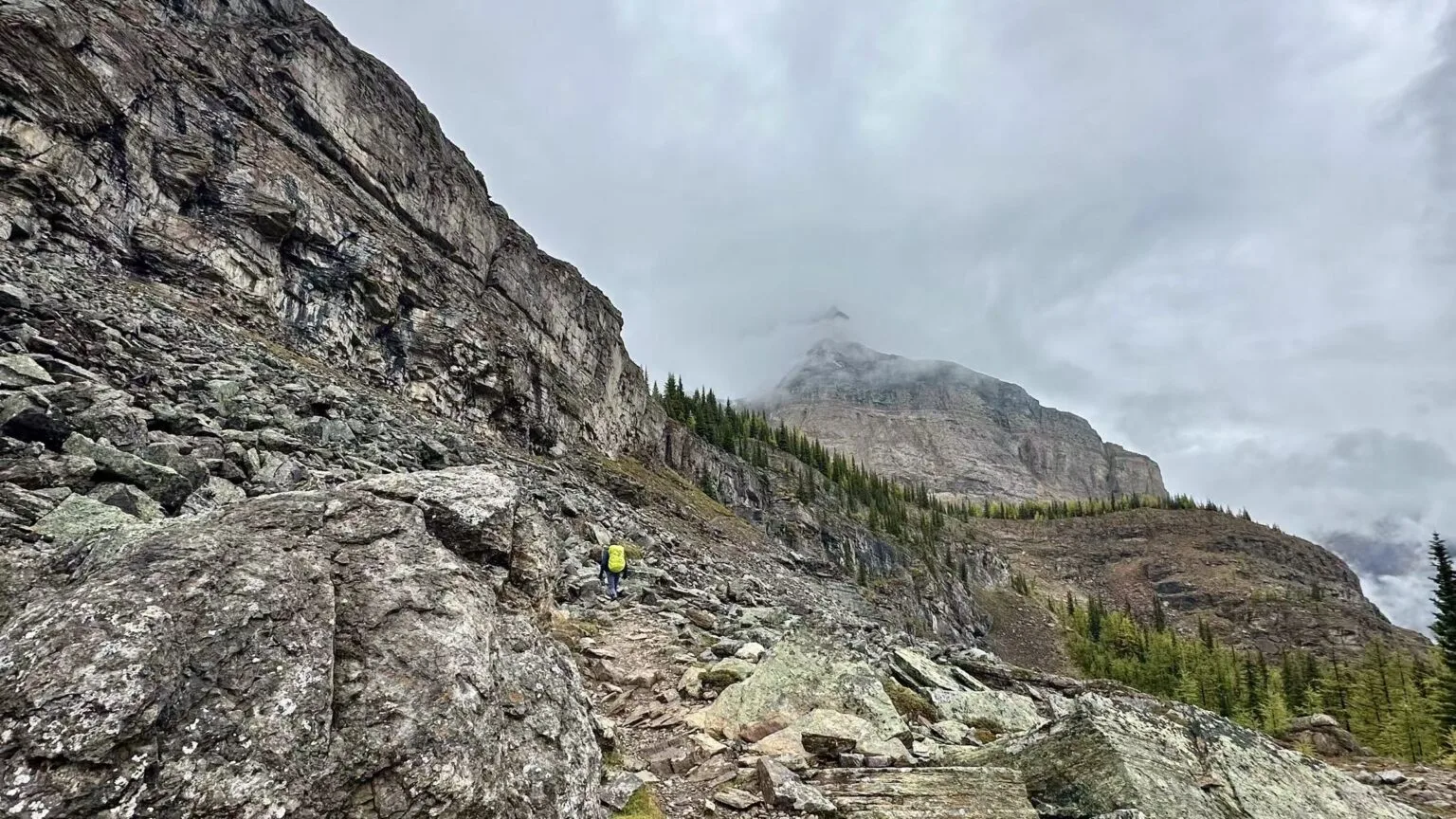
Leaving the forest section of the Lake McArthur Low Level Trail, after a short descent, the day’s real climbing began. This is the slightly tougher part of the way in. The grade steepens, the tread changing from soft dirt to more gravel and rock steps — but fortunately it doesn’t last long.
But this stretch also has the densest larches. About thirty percent of the canopy had turned, gold and dark green layered overhead, sunlight filtering through the needles so the whole trail looked gilded in warm light. Every few steps I had to stop for a photo, then felt that no photo could capture what it looks like when light passes through half-gold, half-green needles.
Lake McArthur: the deep-blue finish line
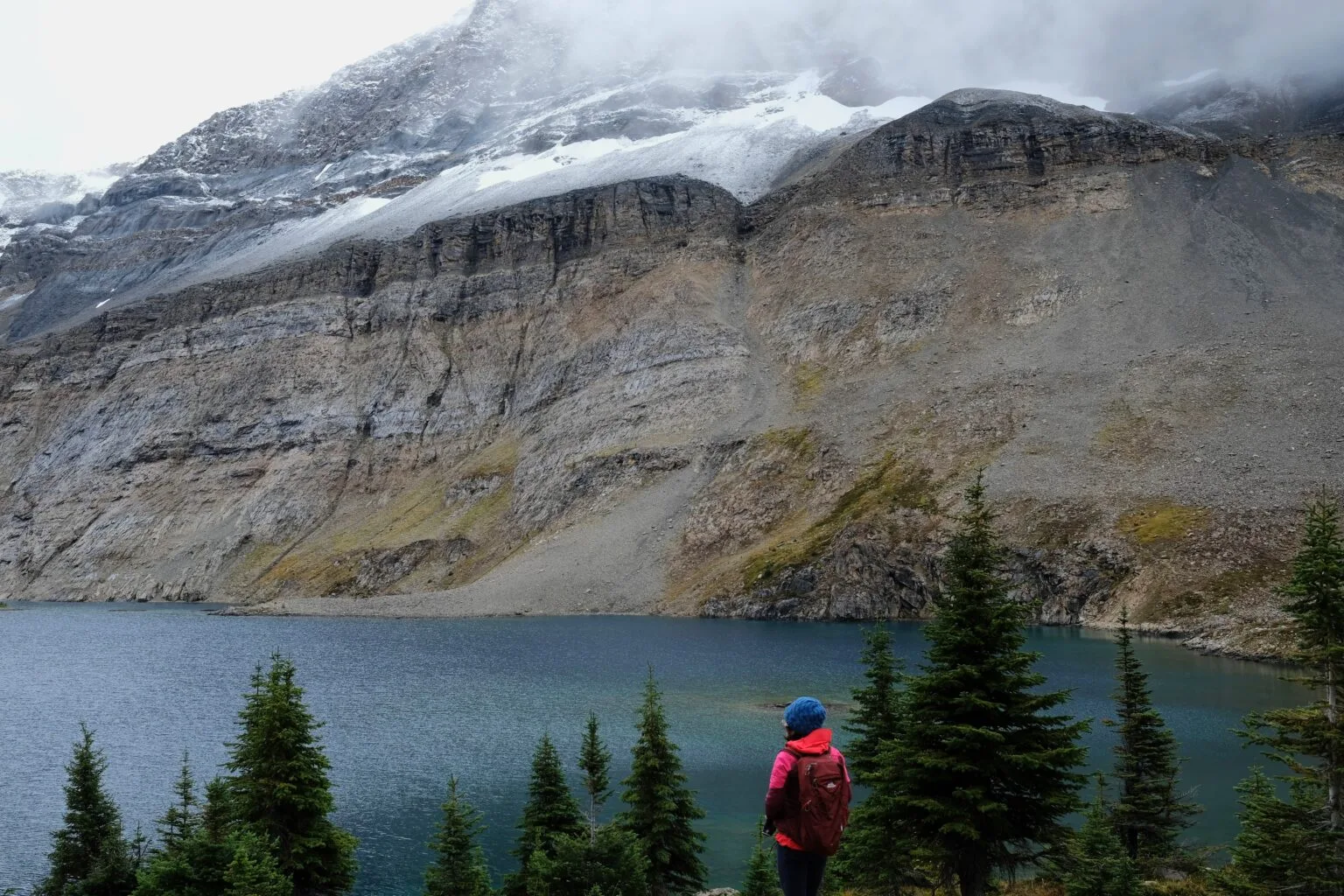
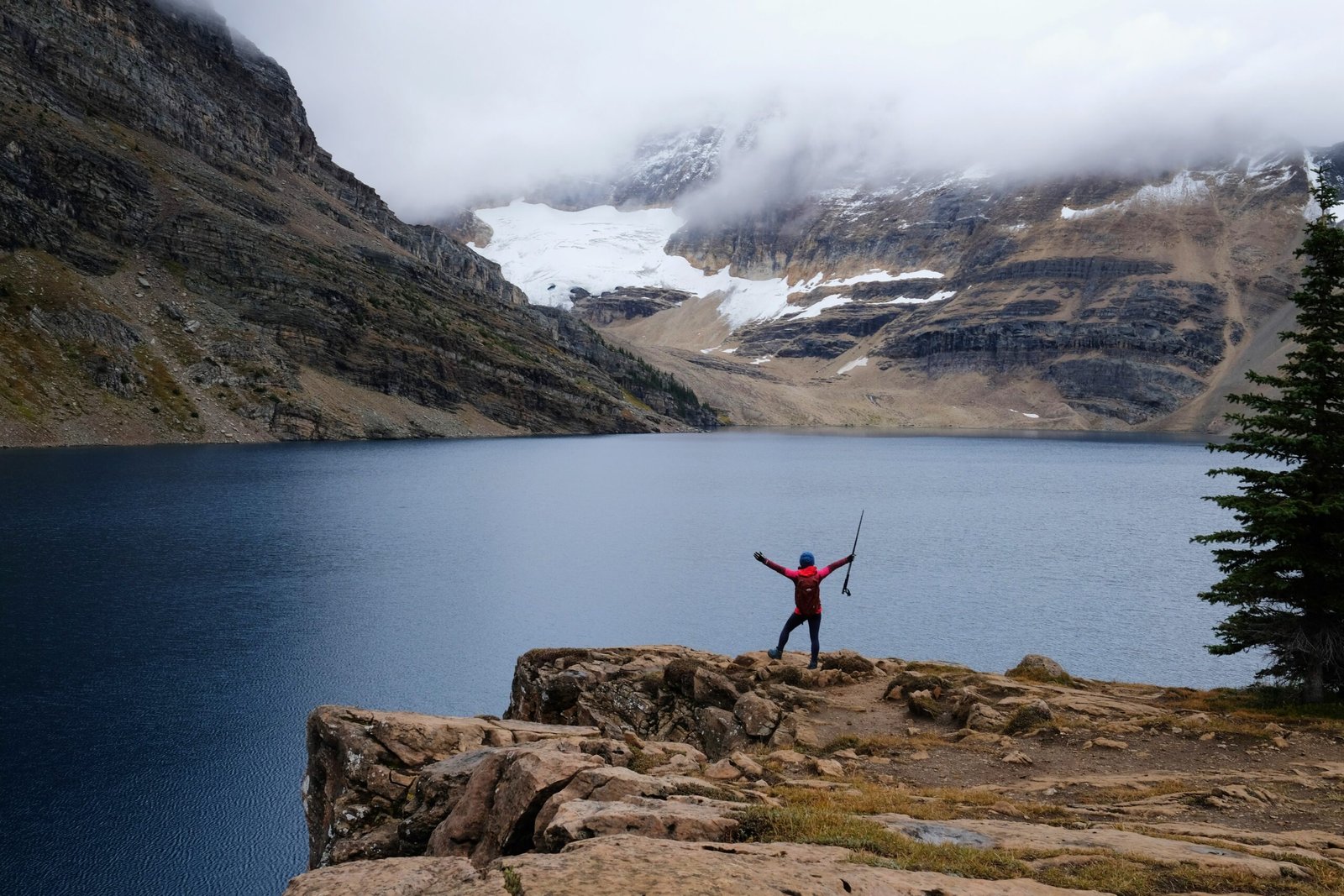
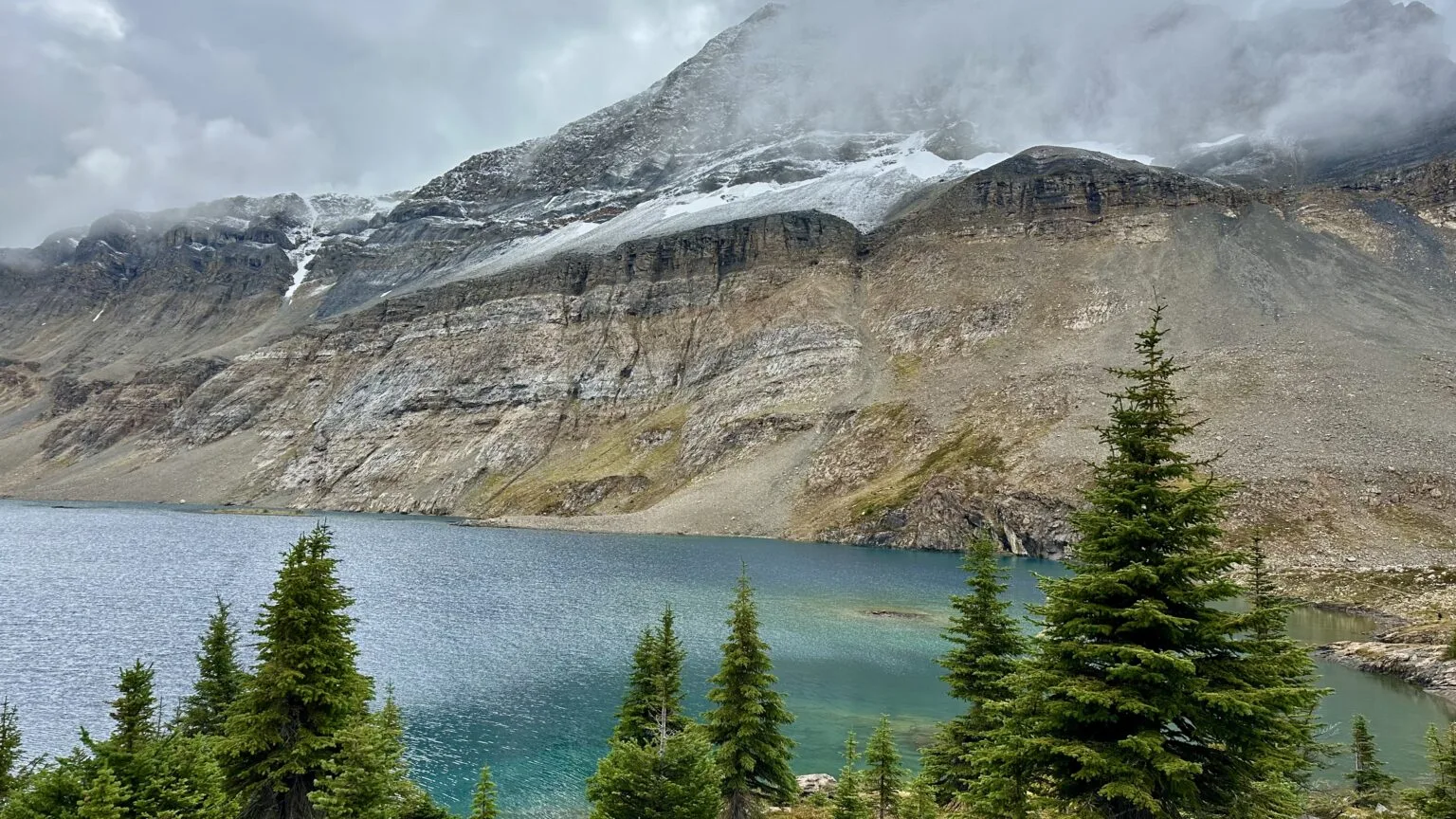
Topping the last gravel pitch, the trail suddenly levels out – and Lake McArthur opens up in front of you, ringed by snowy peaks and glaciers!
First reaction: this lake is so much bigger than we imagined.
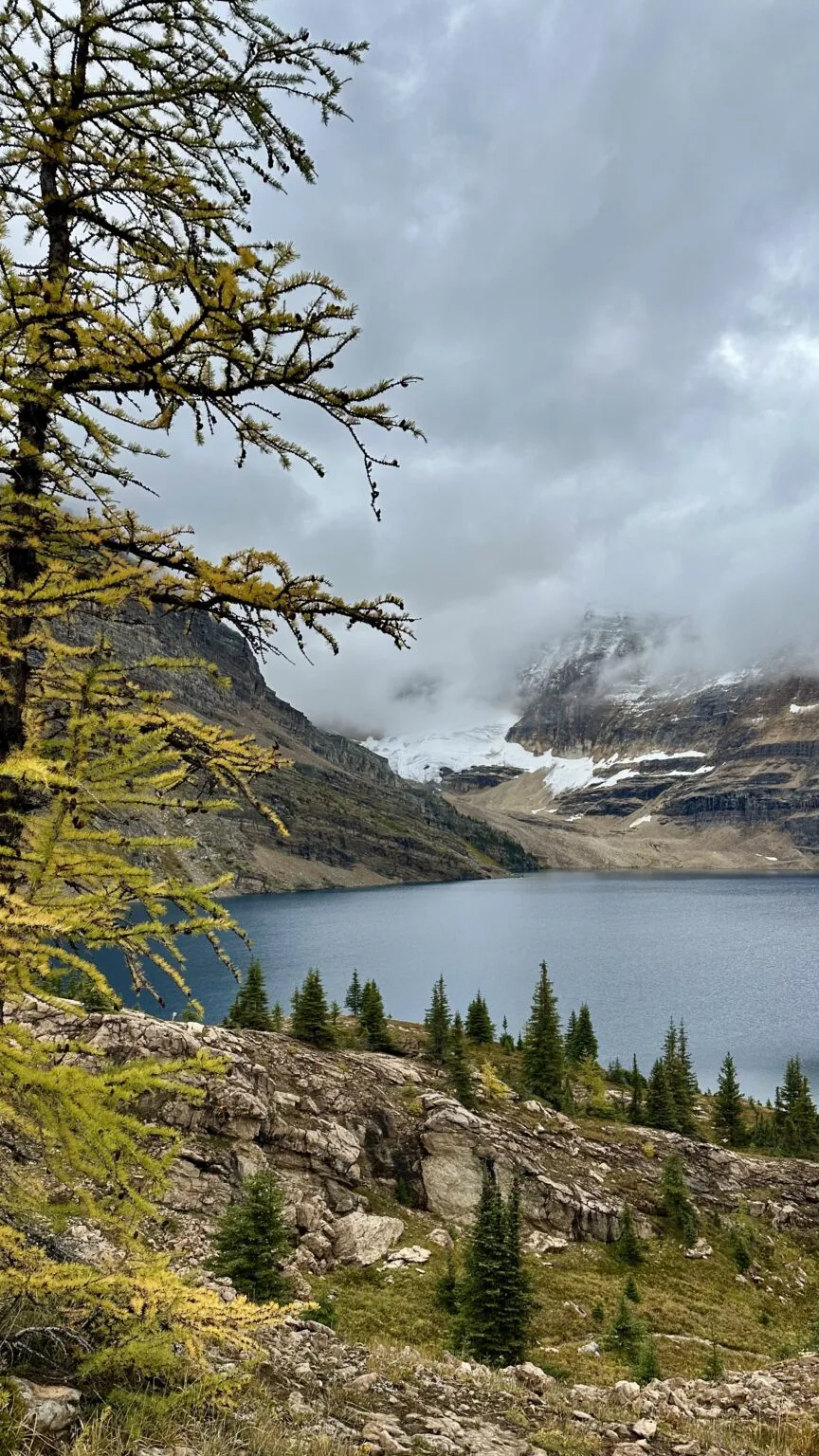
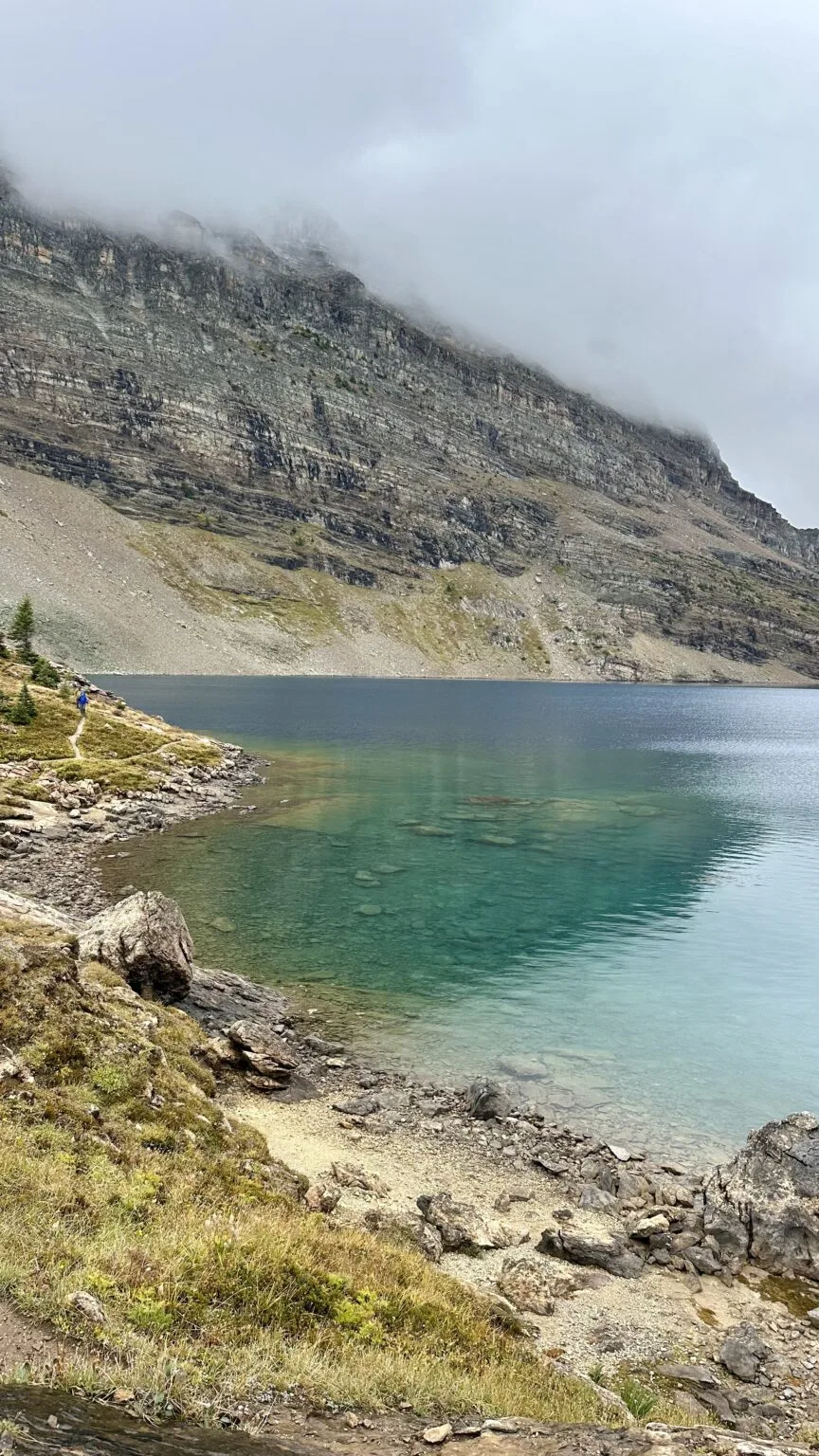
Unlike the bright blue-green of Lake O’Hara, Lake McArthur runs deeper, almost navy, even inky from some angles – partly because it was a grey, sunless day. But as we walked closer to the shore, the color kept shifting, turning blue like the copper sulfate solution from junior-high chemistry class!
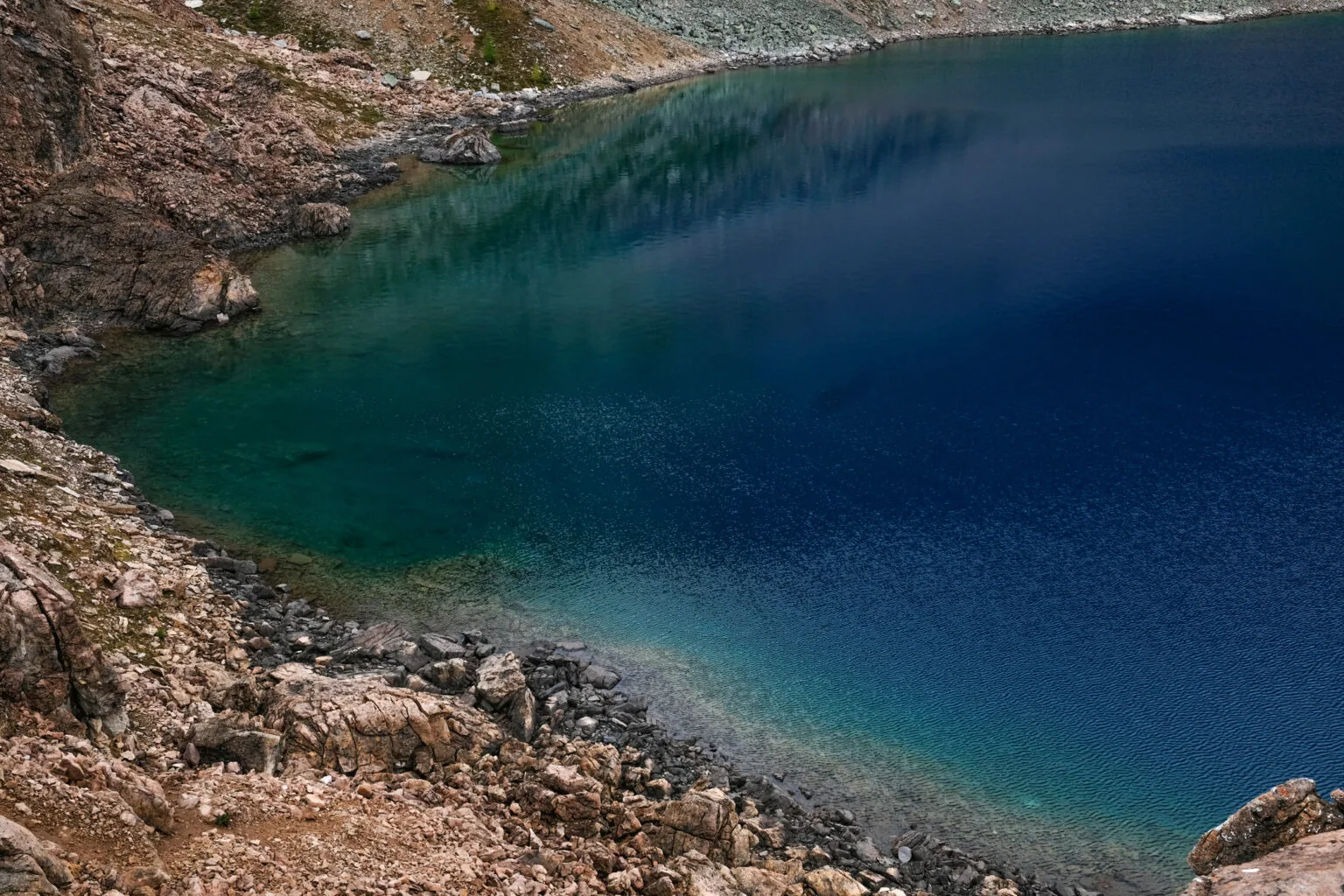
I only learned later that this lake is just 1.5 km long yet 85 metres deep. It’s that depth swallowing the light and reflecting back only the calmest layer of blue. The whole surface looked like a huge, gently rippling deep-blue gemstone, walled on three sides by grey-white limestone peaks, the glaciers glowing cold-white in the afternoon light.
Returning via the High Level to Schaffer Lake
For the return, we switched to the High Level route. This side first crosses a scree slope and open alpine meadow before dropping to Schaffer Lake. Unlike the corner we’d glimpsed on the way in, this time we walked right down to the shore. The lake lay still, mirroring snowy peaks, golden larches and green firs.
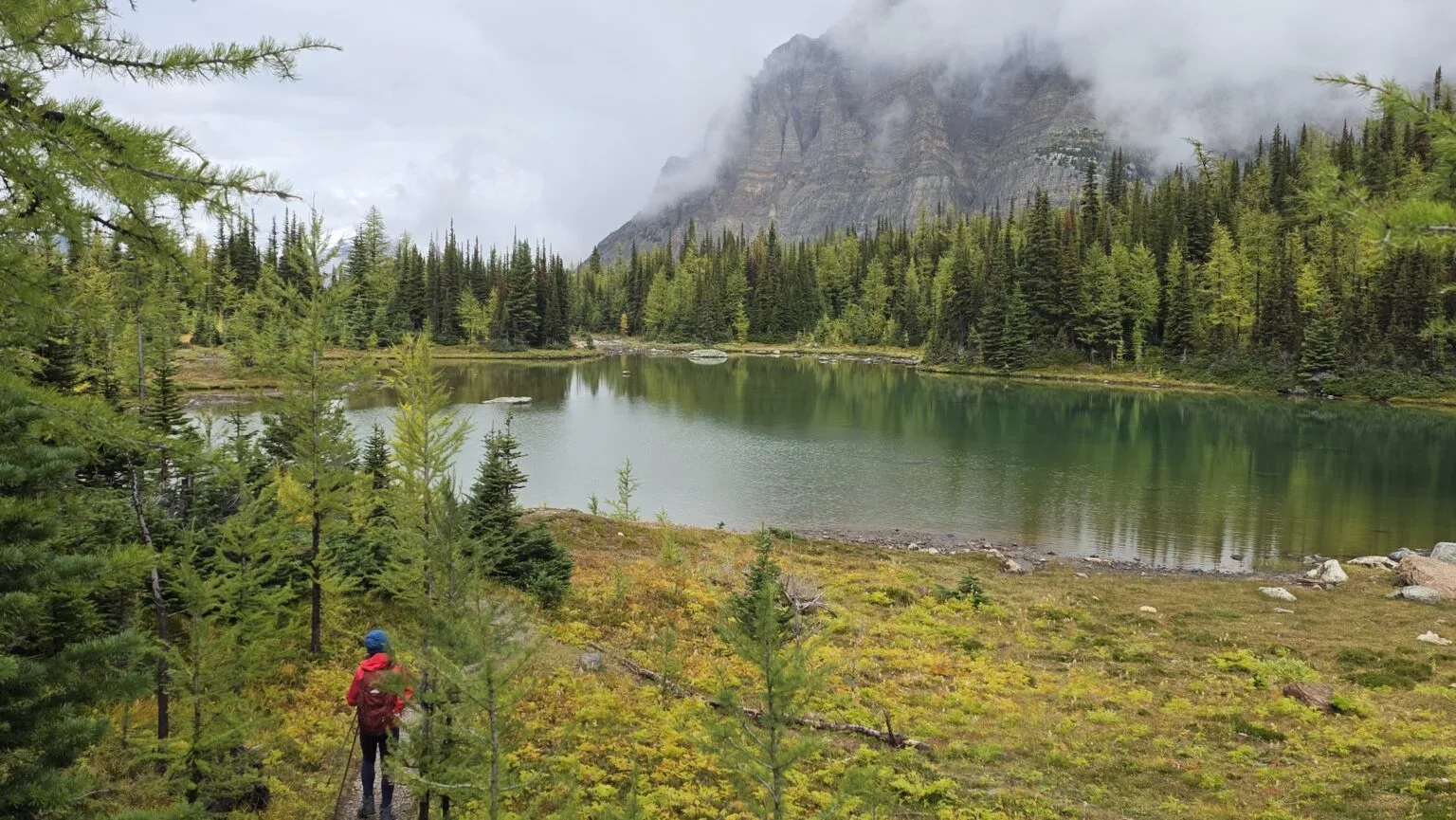
Standing on Schaffer Lake’s shore looking northeast, there seemed to be faint traces of trail along the high ridge – and to the northwest, the direction of West Opabin and All Soul’s. Would we be up there tomorrow?
Related reading: Lake O’Hara and Lake Oesa via Alpine Loop
From Schaffer Lake the trail continues down, joining the Big Larches Trail through open meadow and stands of larch forest. September’s meadow had already yellowed and reddened, merging with the half-gold, half-green larches, grey peaks and lingering snow beyond. Only in larch season is the Big Larches Trail prettier than the Alpine Meadow we came in on! We’d only caught the very start of the color change, but the dusting of gold had a fresh “autumn just beginning” feel.
On the last downhill back toward Le Relais, we passed through that larch forest from the morning again. The afternoon light slanted lower than when we’d come through, and the newly yellowed needles glowed faintly amber.
Back at Le Relais: carrot cake and hot chocolate
Lake McArthur and Big Larches Loop is done. Time to head into Le Relais hut and treat ourselves! A wood stove was burning inside, wonderfully warm. They had all kinds of hot and cold drinks, even ice cream. We ordered carrot cake and hot chocolate. The carrot cake here is supposedly famous, and it lived up to it -rich, layered flavors, more than just cinnamon and carrot, and genuinely not too sweet. Which, as we all know, is one of the highest compliments Chinese palates give Western desserts!
Le Relais hut is run by volunteers from the Lake O’Hara Trails Club, and every dollar goes back into the environment and trail upkeep here. Hours are 8:30 am to 6:30 pm. Their website has detailed descriptions of every trail in Lake O’Hara – worth a read! Right across the way are Lake O’Hara and the trailheads: start your perfect day with a coffee here.
Where to stay in Lake O’Hara
Three ways to stay overnight inside Lake O’Hara
There are only three ways to spend the night in the Lake O’Hara area, all must be booked in advance, and all include your bus seat (Parks Canada).
Campground: 30 tent sites, the most economical option. In 2026 the campground runs June 19 to October 4, with reservations opening February 10 at 8:00 am Mountain Time – usually gone within minutes. Three-night maximum, four people per site. Facilities include two cooking shelters, a fire pit, food storage lockers, a grey-water disposal point and outhouses. The campground has treated well water, but early and late season it may not be available – bring your own stove.
Elizabeth Parker Hut (ACC hut): a rustic hut run by the Alpine Club of Canada, open year-round. Summer spots are allocated through a lottery starting the previous December – very hard to get. ACC membership gets you an extra lottery entry.
Lake O’Hara Lodge: a lakeside boutique lodge built by the Canadian Pacific Railway in the 1920s, privately operated today. Open mid-June to early October in summer, late January to early April in winter. Three-night minimum, from about $1,055 per night for two. Staying at the lodge includes its own bus.
For full details, see my Lake O’Hara camping guide (English version coming soon): how to snag one of 30 sites.
If you can’t get lodging inside Lake O’Hara
Option 1: snag a day-use bus ticket
For 2026 the day bus switched to a lottery system. Registration ran March 2 at 8:00 am to March 23 at 11:59 pm Mountain Time. Buses leave from the Lake O’Hara parking lot, about $25.50 per person round trip. Inbound times are generally 8:30 and 10:30 am, returns at 2:30 and 4:30 pm. The last bus at 6:30 pm is reserved for overnight guests.
Option 2: walk the 11 km in yourself
The 11 km access road is closed to private vehicles and bikes year-round, but there are no limits and no reservations needed for walking in. About 2.5 hours one way, 22 km round trip – come well prepared (water, food, bear spray, proper shoes and clothing) (Parks Canada). Inbound buses won’t sell you a ticket even with empty seats, but the return bus is $15 per person if there’s room – bring cash, cash only, paid when boarding.
Nearby towns
The Lake O’Hara parking lot sits right off the Trans-Canada Highway, 12 km east of Field and 15 km west of Lake Louise. No overnight parking or camping in the lot.
The closest lodging is in Field (about 15 minutes from the parking lot) or Lake Louise (about 20 minutes) . If you’re combining it with Banff, staying in Banff works too (about 70 km). Golden is further at 1 hour 20 minutes, with more options and the cheapest prices.
Disclosure: This post contains affiliate links. If you book through them, we may earn a small commission at no extra cost to you.
Friendly reminder: there’s no overnight permit for the parking lot, so you can’t sleep in your car there the night before or after the hike. Wherever you stay, aim to reach the Lake O’Hara parking lot 20 minutes before your bus time – enough to pick your parking spot, gather all your overnight and hiking gear, and check in with the Parks Canada staff.