
Why Choose Salkantay Trek?
We picked the Salkantay Trek because, unlike the Inca Trail, it didn’t require stressful permits, giving us the flexibility we needed. We craved those incredible glacier and high-pass views!
Our group of six chose a private, 5-day tour with Alpaca Expeditions (total cost: $4200 USD), which handled all the camping, food, transport, and visits to both Machu Picchu and Huayna Picchu. This 5-day itinerary reflects our great experience back in May 2017. Trust me, if you want a stunning alternative, this is the one!

How to Reach Machu Picchu: Scenic Train Options
To visit Machu Picchu, you’ll need to make your way to Aguas Calientes, the gateway town for this iconic site. Here are the main options:
- Train from Cusco: Starting from Poroy station, just 20 minutes outside Cusco city center, the journey takes about 4 hours.
- Train from Ollantaytambo: This popular tourist town, located 2 hours by car from Cusco, offers a shorter 2-hour train ride to Aguas Calientes.
Once in Aguas Calientes, plan to stay the night before taking a 30-minute bus ride to Machu Picchu early the next morning. We hiked Salkantay to Aguas Calinetes and took the trail back to Cusco.
The Inca Trail: A Classic Journey to Machu Picchu
The Inca Trail is the most famous trekking route, ending with a dramatic entrance to Machu Picchu through the Sun Gate. Here’s what you need to know:
- Duration: 4 days and 3 nights.
- Permit Requirements: Permits are limited to 500 per day (including guides and porters) and must be secured through a travel agency – typically 6 months in advance during the high season.
- Horses Not Allowed: All gear must be carried by hired porters.
This trek is a cultural journey, rich with archaeological sites and history, making it an unforgettable experience for those who secure a spot.
The Salkantay Trek: A Scenic Alternative
If you’re looking for a route that emphasizes natural beauty over cultural landmarks, the Salkantay Trail is an excellent choice.
- No Permit Required: Unlike the Inca Trail, the Salkantay Trek does not require a permit, offering more flexibility in planning.
- Options: You can book a guided tour (5 days, 4 nights or 4 days, 3 nights) or tackle it independently.
- Our Experience: We joined a 5-day, 4-night private tour with Alpaca Expeditions, ranked #1 on Tripadvisor at that time. The total cost was $4200 USD for six people and included:
- Cusco briefing before the trip. Cusco hotel pickup and drop off.
- Three nights of camping and one hotel night (Aguas Calientes)
- A professional guide, chef, two horsemen, and porters.
- Meals, transport, train tickets, hotel upgrades, and entrance to both Machu Picchu and Huayna Picchu.

DIY Routes for Independent Travelers
For adventurous backpackers, the self-designed Salkantay route offers a budget-friendly alternative. Along the way, we often found a few young couples with heavy and big backpack, using local minibuses, camping in small towns, or staying with locals.
The Catch? Going solo means you really need a good handle on Spanish to manage the logistics.
The reward? You get total flexibility to explore the Andes’ stunning beauty completely at your own pace. If budget and freedom are your main goals, this route is for you!
Key Points for a Smooth Salkantay Trek Experience
Getting to the Trailhead
The drive from Cusco to the trailhead takes approximately 3 hours, with much of the drive along winding mountain roads. If you’re prone to motion sickness, bring medication, as the high altitude can worsen symptoms.
The drive from Cusco to the Salkantay trailhead took about 3 hours, mostly on winding mountain roads. You absolutely need to be prepared: one friend in our group actually threw up. Maybe the high altitude just makes motion sickness worse? If you are prone to motion sickness, pack that medication!
Gear Provided by Alpaca Expeditions
Alpaca Expeditions supplies the essentials for a comfortable trek:
- Tents
- Sleeping pads
- Pillows
- Basic raincoats
We bring our own SLEEP BAGS. While the gear is clean and well-maintained, keep in mind that the sleeping pads and pillows are not assigned individually. Mark your gear if you prefer to use the same one each night.
Acclimatize Before You Start
Lima sits at sea level, while Cusco is at 3400 meters above sea level. To avoid altitude sickness, plan to spend 2-3 days acclimating in Cusco or the Sacred Valley (which is about 1000 meters lower than Cusco). Use this time to explore Cusco’s historic sites or take a tour of the Sacred Valley.
Salkantay Trek Day 1 is the Toughest
The first day of the Salkantay Trek is the most physically demanding:
- Start Time: Pick-up at 4:20 am at Cusco hotel for a 3-hour drive to the trailhead.
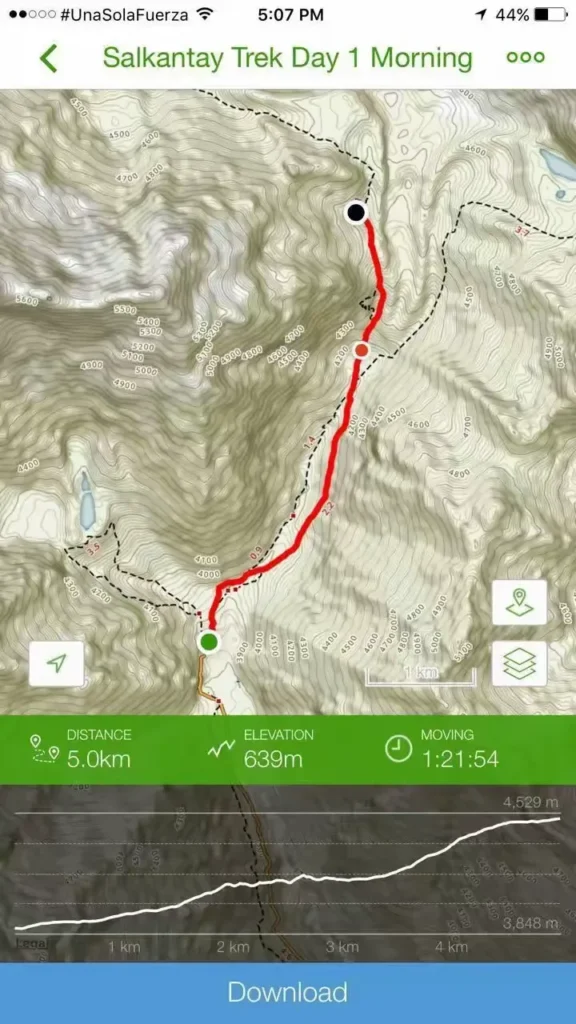
- Distance: 15 km of hiking.
- Campsite Elevation: 3800 meters.
Altitude sickness is most likely to occur on this day due to the high elevation. Fortunately, the altitude decreases on later days, making the remainder of the trek more manageable.
Pre-Trek Preparation
One day before our trek, we visited the Alpaca Expeditions office in Cusco for registration and a pre-trek briefing. Here’s what you’ll need to do:
- Payment: Pay the balance in USD cash.
- Passport: Present your passport for registration.
- Canvas Travel Bag: Receive your travel bag for the trek.
You’ll only need to carry a small day pack with essentials like water, snacks, and clothing for each day.
Always Carry Your Passport on Salkantay Trek
Your passport is required for:
- Accommodations: Hotels in Aguas Calientes.
- Entry: Admission to Machu Picchu.
Related Reading
Salkantay Trek to Machu Picchu Day 2
Salkantay Trek to Machu Picchu Day 3
Salkantay Trek to Machu Picchu Day 4
Salkantay Trek to Machu Picchu Day 5
Day 1 Highlights – Soraypampa and Beyond (3800 meters)
Starting Salkantay Trek at Soraypampa
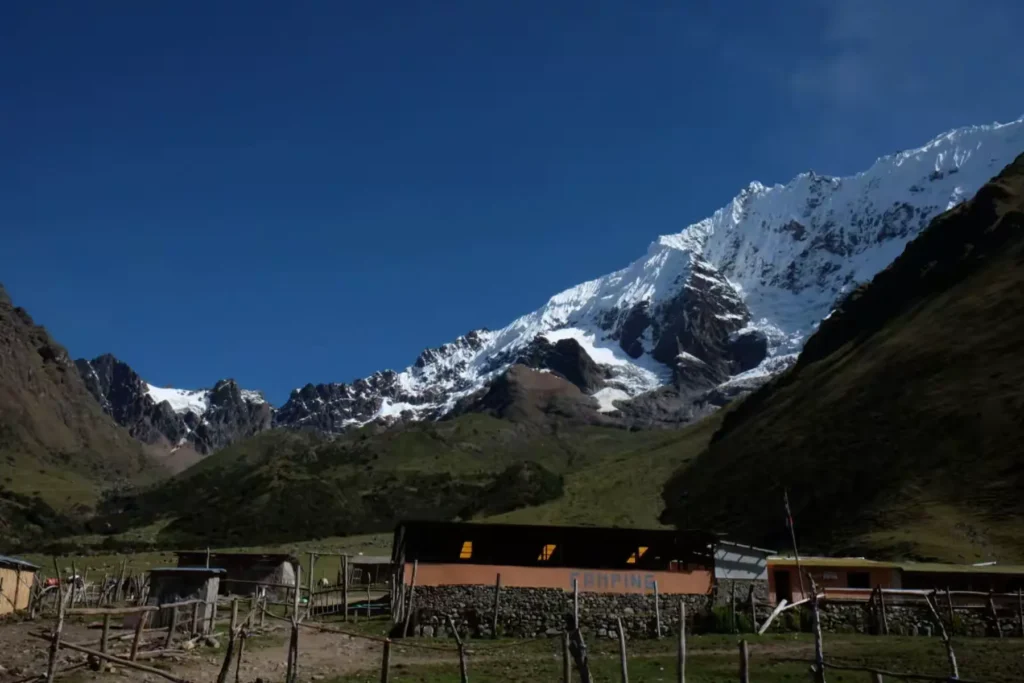
After a 3-hour drive from Cusco, we arrived at Soraypampa, the trailhead and base camp for the Salkantay trek and hikes. The area featured simple accommodations and campsites operated by various trekking companies. Local villagers, mostly farmers and horse owners, transition into roles as porters and horsemen during the busy tourist season.
The bathrooms on Salkantay trek were basic but functional, equipped with flush toilets. However, many lacked toilet seats – perhaps an intentional design choice to discourage sitting??
Breakfast with a View
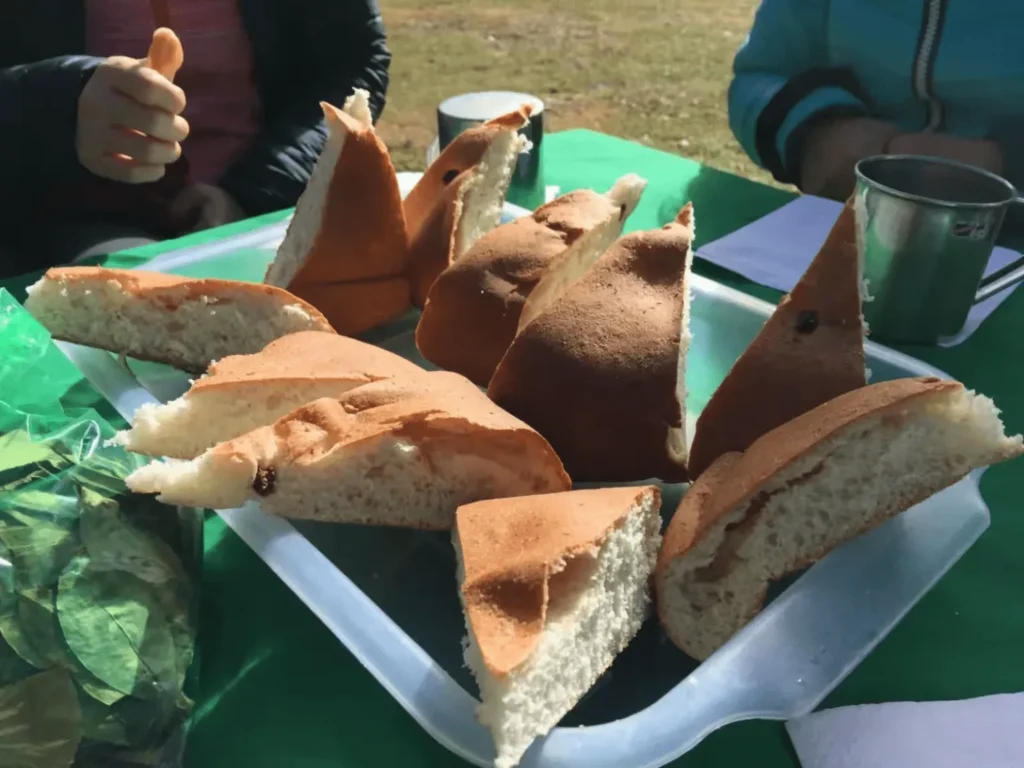
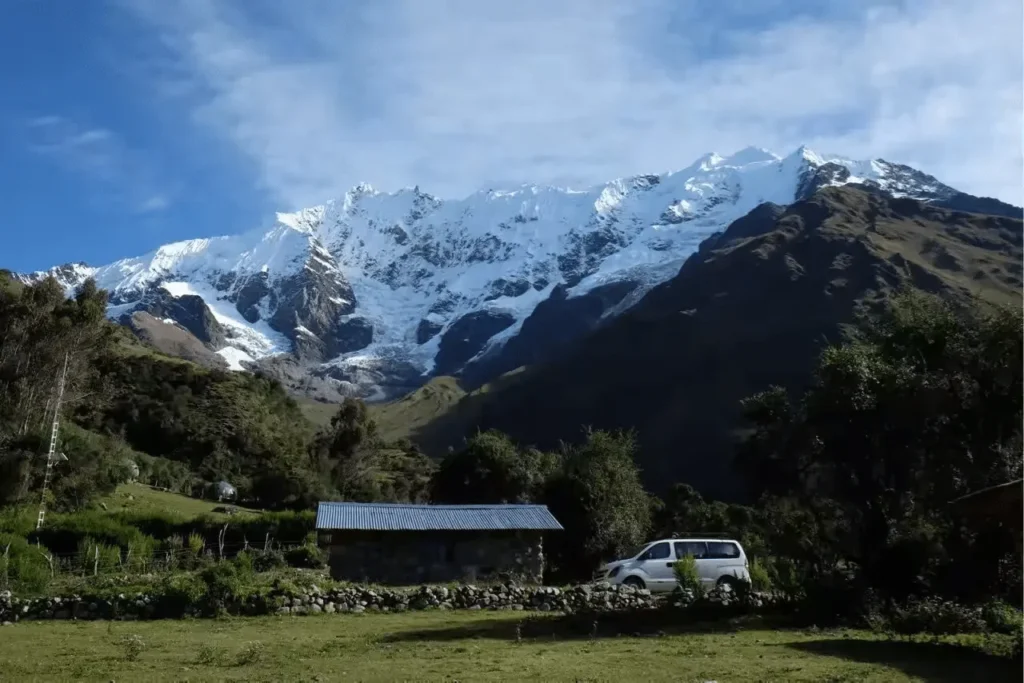
Our day started with a breathtaking breakfast overlooking snow-capped mountains. The chef and porters quickly set up the meal, serving coca tea, eggs on a hot plate, and traditional Chuta bread from the Cusco region. Fresh local fruits, including llama beans and trout, rounded out the hearty meal, preparing us for the challenges ahead.
Trekking Up to Salkantay Pass
The First Climb
Fueled by breakfast, we embarked on a 600-meter climb to Salkantaypampa (4150 meters). The trail offered incredible views of the surrounding mountains and grazing cows and horses. After a quick snack, we reached our next milestone – Soyrococha (4400 meters) – just in time for lunch.
Lunch at Soyrococha
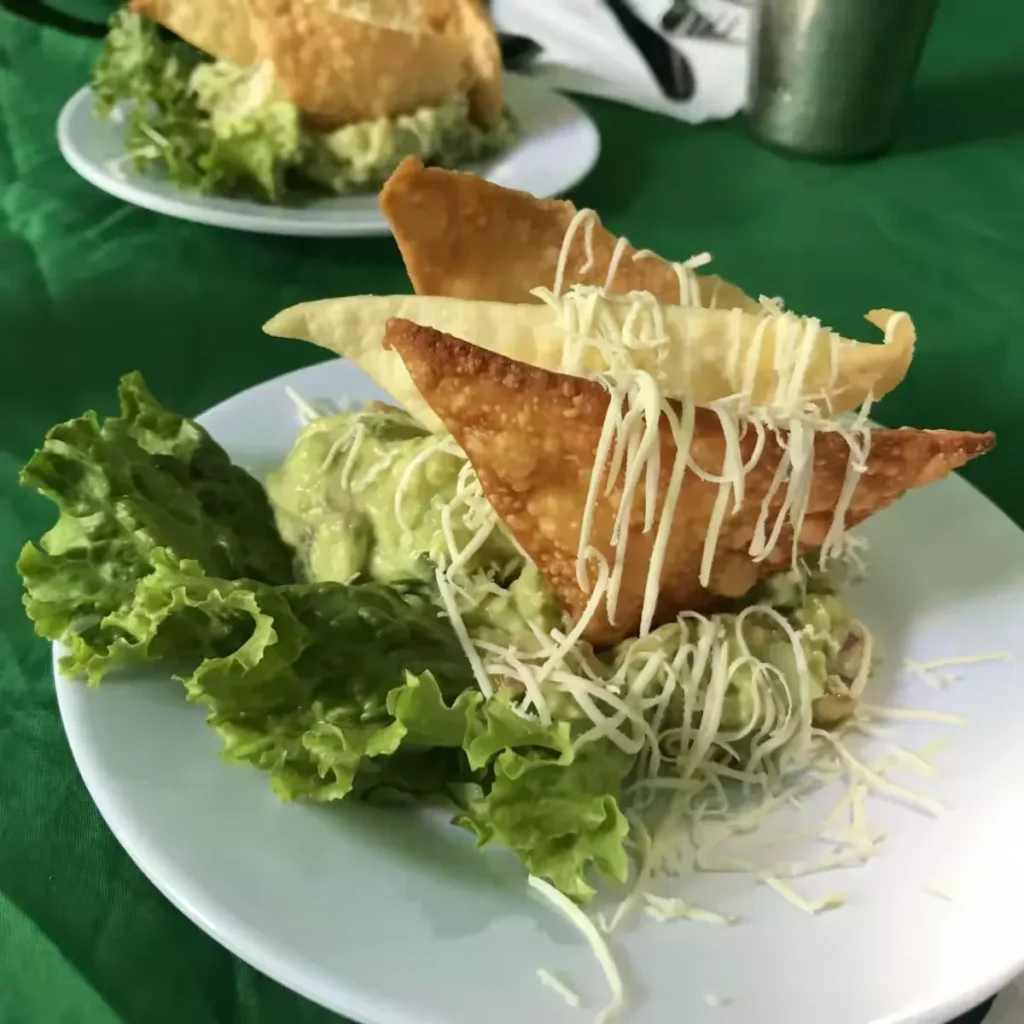
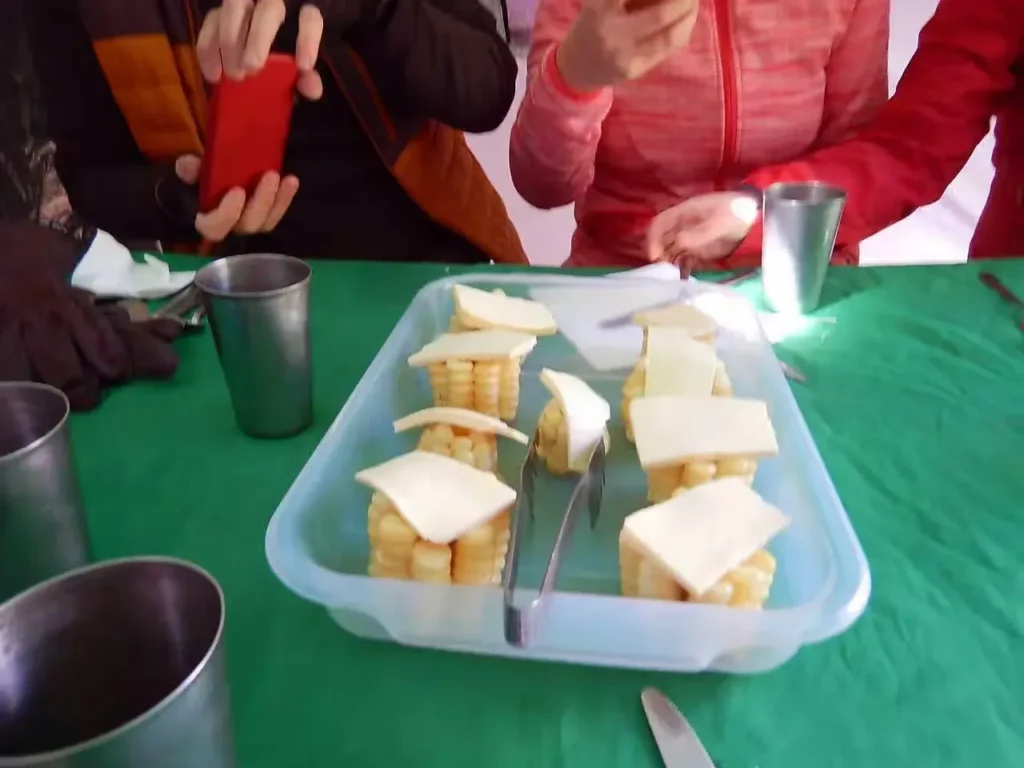
Lunch was served in a simple dining tent. The meal featured corn, cheese, and a refreshing salad with beans – delicious but deceptively filling. As we learned later, overeating during lunch wasn’t a good idea, as the afternoon trek demanded even more effort.
The Steepest Ascent on Salkantay Trek
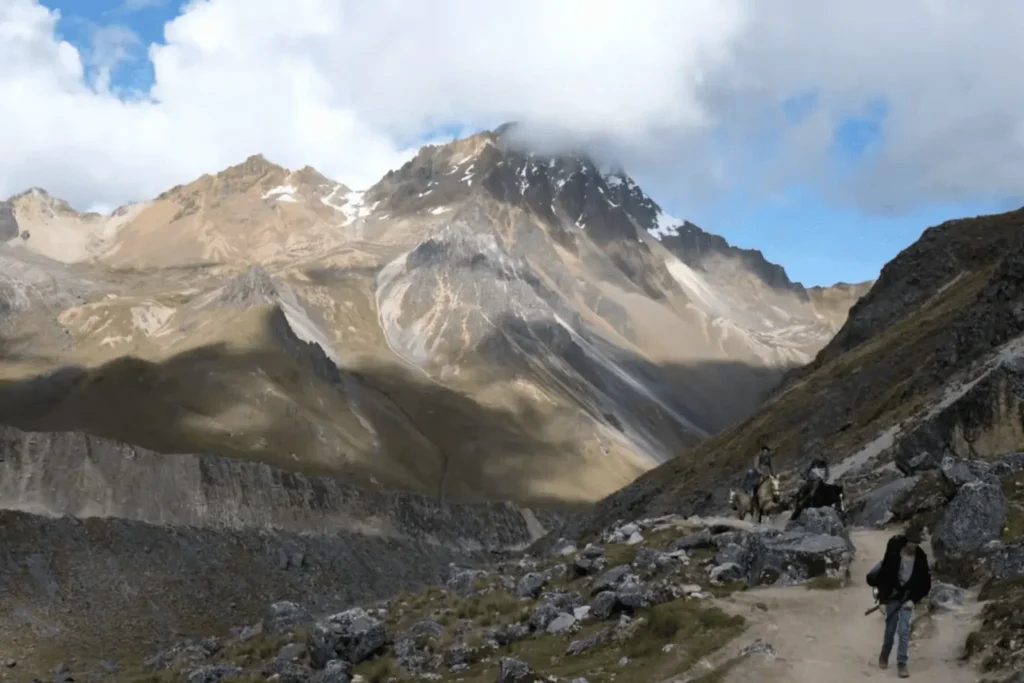
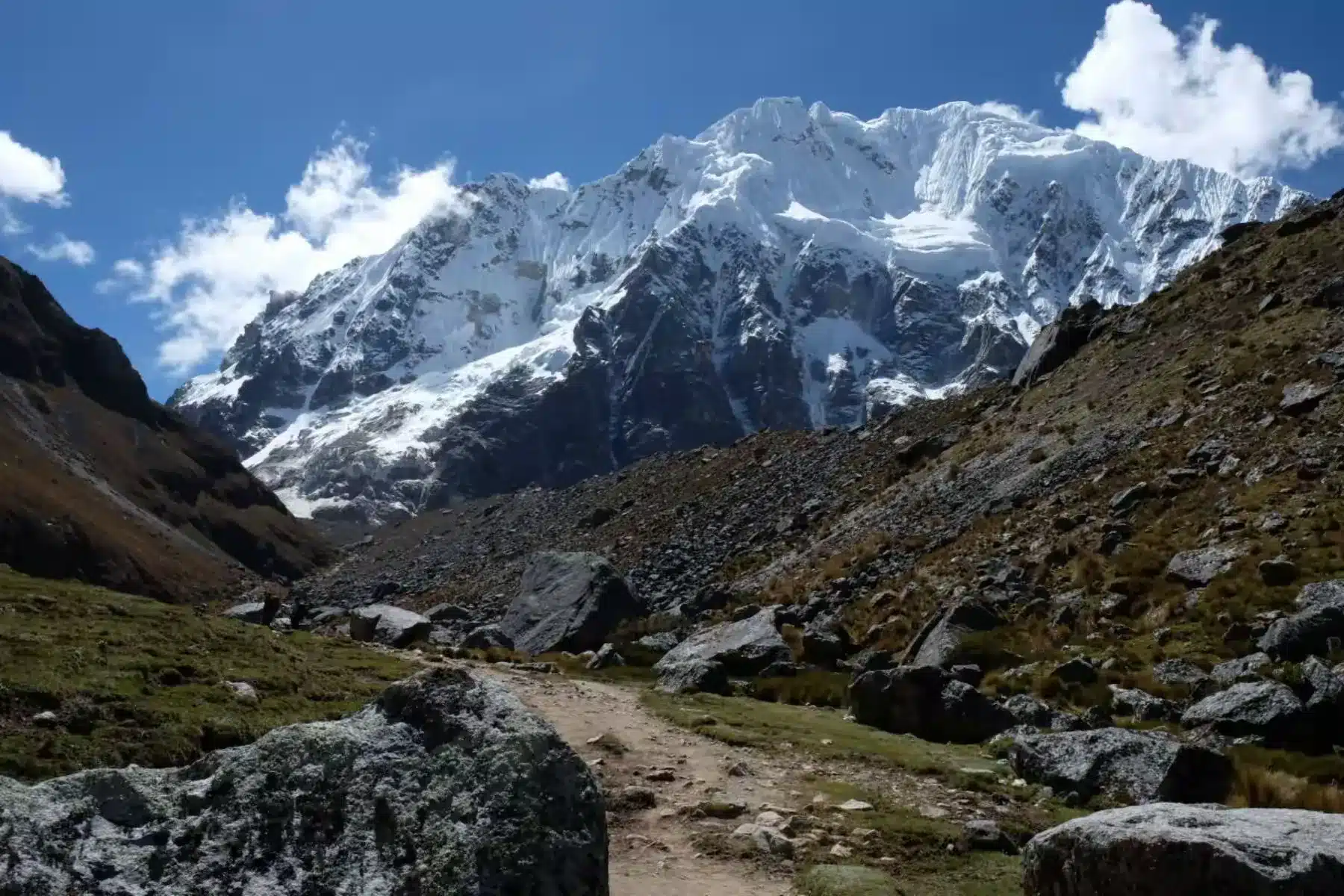
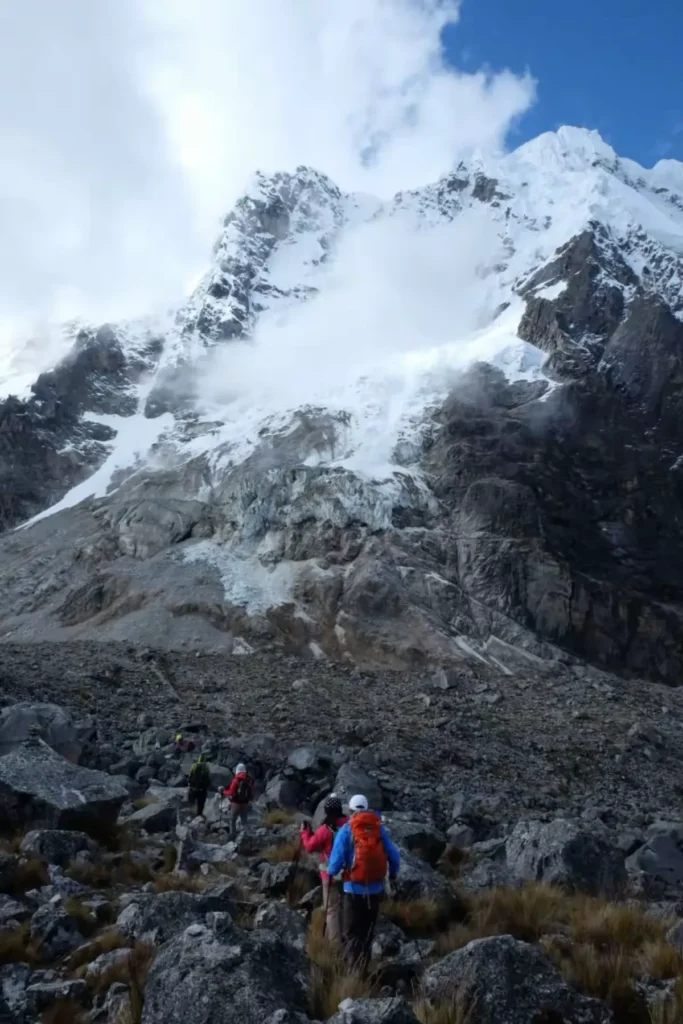
Post-lunch, we tackled the steepest section of the trek, ascending toward Salkantay Pass (4620 meters). The climb tested our endurance, and the altitude made every step feel heavier. However, the panoramic glacier views at the top were worth every effort.
Reaching Humantay Glacier Lake
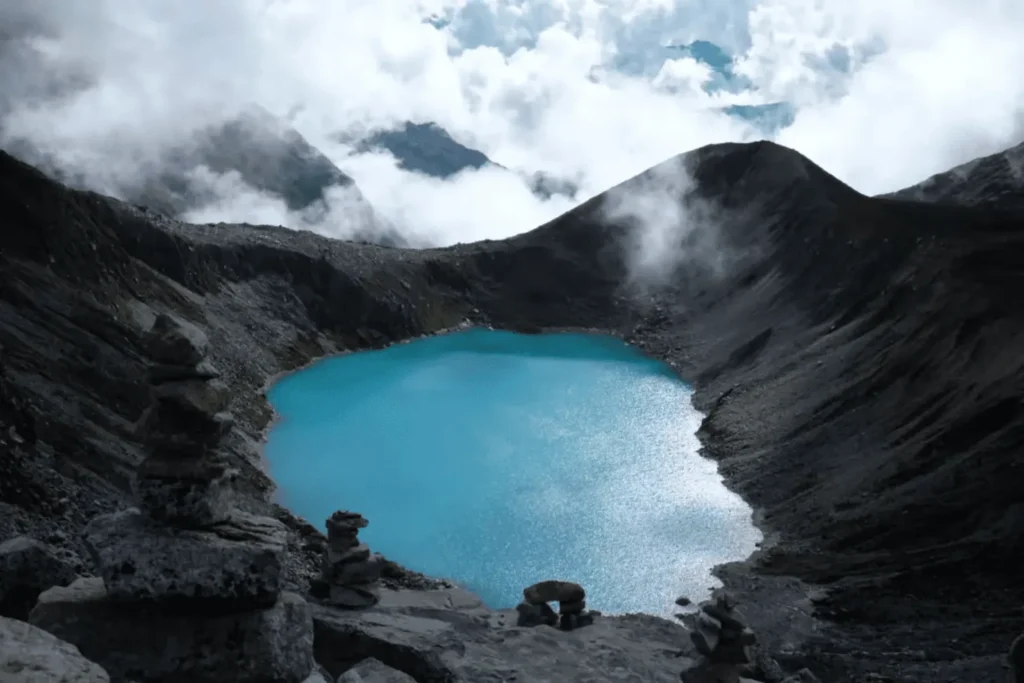
After crossing Salkantay Pass, we detoured to the breathtaking Humantay Glacier Lake, a serene ice lagoon formed by meltwater from the Humantay Glacier. The scenery was otherworldly, with vivid turquoise water surrounded by rugged peaks. While we didn’t swim, we admired the courage of those taking a dip in the frigid waters.
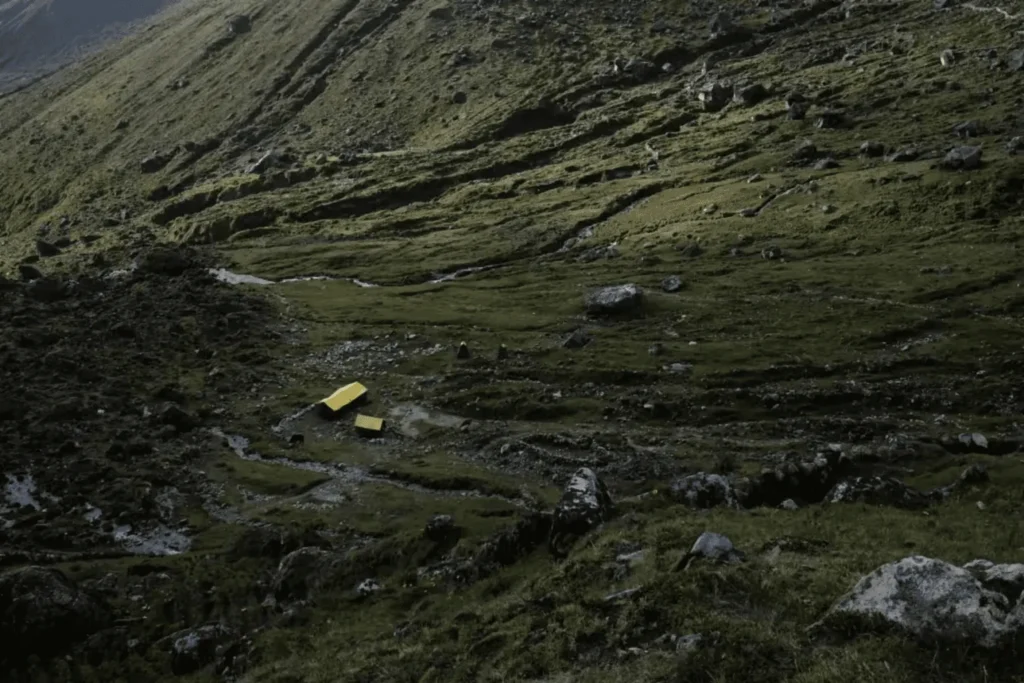
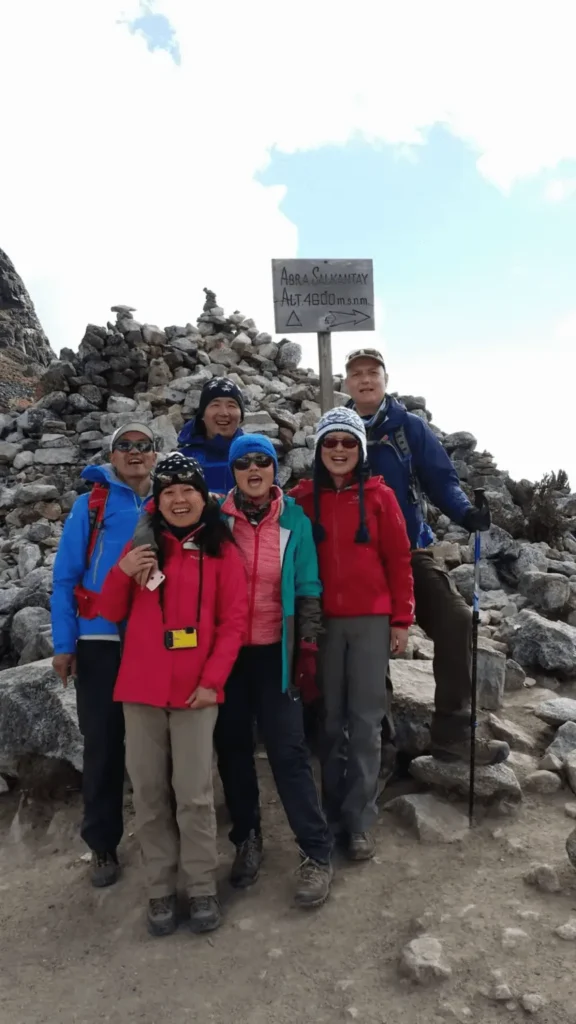
After successfully crossing the Salkantay Pass (4,620m), we felt a sense of relief – the toughest part of Day 1 was over! What followed was an incredible transition. The trail began a gradual descent from the stark high-altitude mountains and quickly plunged us into the humid cloud forest. The change in scenery was dramatic and absolutely breathtaking!
Huayrocmacha Camp & Dinner
We finally dragged ourselves into Huayrocmacha (3,800m), our first night’s campsite, just as dusk was setting in. Our tents were pitched beneath a thatched shelter, and the best part? The standard four-person tents were assigned to just two of us!
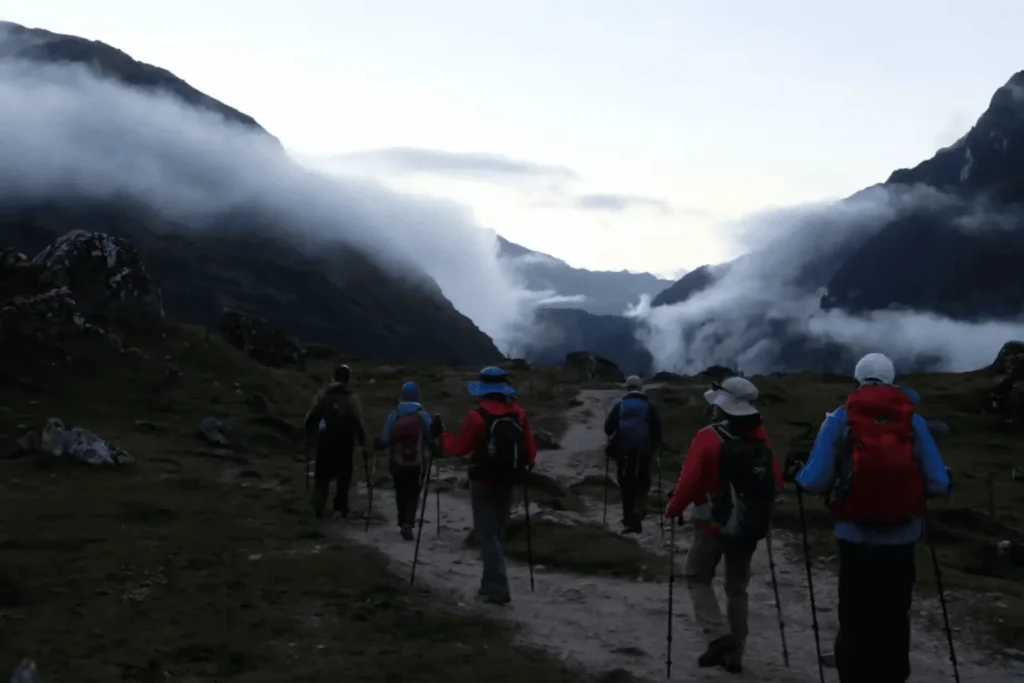
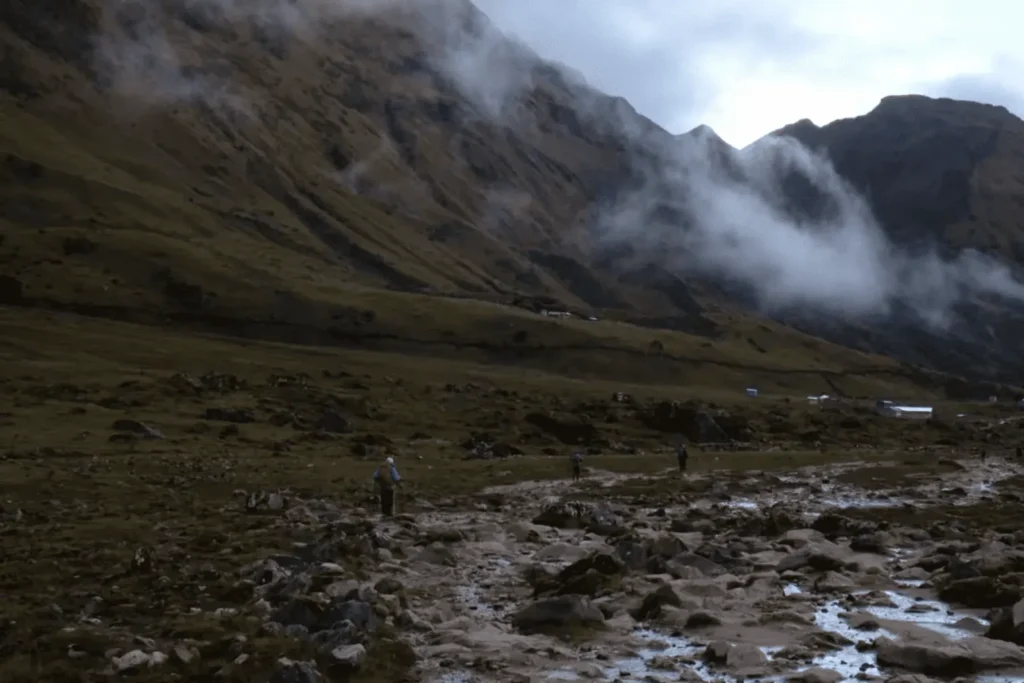
The staff were incredible – they applauded our arrival, congratulating us on finishing the toughest day. Our tents were already set up with sleeping mats and pillows inside, and they immediately brought hot towels and water to our tent doors.
After a quick rest, it was time for the pre-dinner Happy Hour: hot tea, popcorn, and biscuits. It was the perfect comfort food while we waited for the main meal.
Dinner always started with soup; different kinds, all fragrant. (Though, a personal note: I found all the Western-style soups a little too salty!) The main dishes, however, were surprisingly delicious and perfectly suited our tastes. Every meal consisted of soup, salad, and four hot entrées—all somehow conjured up by the chef using just two small gas burners while crouched on the ground!
Dinner concluded with a truly stunning dessert: flambéed bananas with fiery liquor. What a perfect ending to the most challenging day.
Ready for Day 2? Click here to read: Salkantay Trek to Machu Picchu Day 2 – Descending to the Cloud Forest